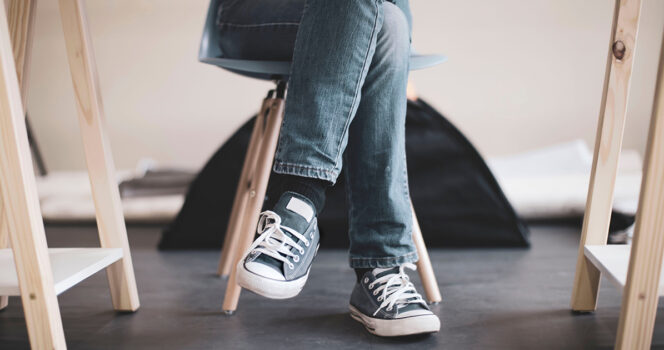
When a woman crosses her legs, it may look like a simple habit or a comfortable sitting position, but this everyday gesture can reveal much more. From confidence and comfort to social awareness and personal boundaries, the way someone sits can communicate subtle messages without saying a word.
Let’s explore the psychology, history, and social meanings behind this timeless body language.
A pose shaped by history
Long before modern fashion and office culture, the way women sat was closely connected to ideas of elegance, manners, and femininity. During the 19th century, women were often expected to sit with their ankles crossed or their legs positioned carefully to one side, as crossing at the knees was considered inappropriate in many social settings.
Decades later, the 1960s brought a new image of confidence and sophistication. Fashion icons such as Audrey Hepburn and Jackie Kennedy turned the crossed-leg pose into a symbol of style, grace, and self-assurance. It became more than just a posture — it represented elegance and presence.
Today, crossing the legs remains a common part of female body language, but its meaning can vary depending on the situation, personality, and environment.
The psychology behind crossed legs
Although many women cross their legs simply because it feels comfortable, psychologists and body language experts suggest that the gesture can sometimes reflect emotions, attitudes, and social signals.
A form of nonverbal communication
Body language experts believe that legs and feet can reveal unconscious reactions because they are often less controlled than facial expressions or hand movements.
The direction a person’s legs or feet point may provide clues about their level of interest or comfort:
- Legs or feet pointed toward someone: Often associated with attention, openness, and connection.
- Legs or feet turned away: May suggest distance, discomfort, or a desire to create space.
However, body language is not an exact science, and a single gesture should always be considered together with the overall situation and other signals.
A subconscious sense of modesty
For many women, especially when wearing dresses or skirts, crossing the legs can be a natural way to feel more comfortable and maintain modesty in public spaces. This habit has been influenced by generations of social etiquette and cultural expectations.
A way to feel secure and comfortable
Crossing the legs can also serve as a self-comforting gesture. It may create a feeling of personal space and security, especially in unfamiliar environments, crowded places, or stressful situations.
How the gesture changes depending on the setting
In the workplace
In professional environments, sitting with legs crossed at the knee or ankle can often appear calm, confident, and composed. Many people naturally adopt this posture during meetings, interviews, or conversations.
However, constant leg movement, tight crossing, or repeated bouncing may sometimes suggest nervousness, impatience, or tension.
A more open position, such as resting one ankle on the opposite knee, can project confidence and assertiveness. When women choose this posture, it may give a stronger impression of self-assurance and authority.
Around friends
In casual situations, crossed legs usually become less about appearance and more about comfort. Relaxed posture, loose movements, and natural positioning often reflect trust, ease, and familiarity.
During a date
In romantic situations, body language can become more noticeable. Sitting with legs positioned toward someone may suggest interest and engagement, while relaxed movements and open posture can create a feeling of connection.
Still, no single gesture automatically reveals attraction — personality, conversation, and the full context matter most.
The silent message behind the pose
Crossing the legs may seem like a small, everyday action, but it can reflect many things: comfort, confidence, personal style, cultural influence, or simply habit.
Whether at work, social gatherings, or while waiting in public, women around the world continue to use this posture naturally. It is a quiet form of expression — a small movement that can reveal a lot about how someone feels in a particular moment.
The next time you notice someone crossing their legs, remember: it may be more than just a sitting position. It can be a reflection of personality, comfort, and the way we communicate without words.