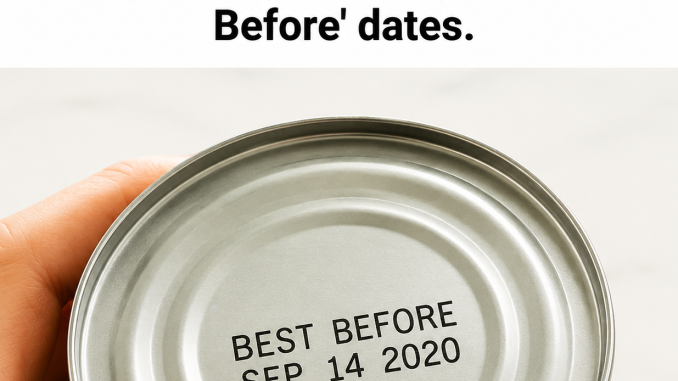
Food expiration dates appear on nearly every product found in grocery stores across the United States. From dairy products and canned vegetables to frozen dinners and packaged snacks, these labels influence everyday shopping habits and household decisions.
Most people quickly check these dates before buying groceries, while others rely on them at home to decide whether food should be eaten or thrown away.
However, despite how familiar these labels are, many consumers misunderstand what they actually mean. A large number of foods remain perfectly safe to eat even after the printed date has passed. In most cases, these dates are not strict warnings about safety — they are simply guidelines related to freshness and quality.
Learning how expiration labels truly work can help families reduce waste, save money, and make better decisions about storing food.
Why Expiration Labels Confuse So Many People
Part of the confusion comes from the fact that different products use different phrases on their packaging.
Common labels include:
- “Best By”
- “Best Before”
- “Use By”
- “Sell By”
Many shoppers assume all of these mean the same thing, but they actually serve different purposes.
According to information from the U.S. Department of Agriculture (USDA) and the Food and Drug Administration (FDA), most food date labels are intended to reflect product quality — not food safety.
That distinction matters more than most people realize.
For many foods, the printed date simply marks the period when the manufacturer believes the product will taste freshest or maintain its ideal texture. Once that date passes, the food may slowly lose some quality, but it often remains safe to consume if stored correctly.
Because of this misunderstanding, millions of Americans throw away food that is still completely edible.
The Real Cost of Food Waste
Food waste has become a major issue throughout the United States.
Experts estimate that nearly 30–40% of the country’s food supply is wasted each year. A large portion of that waste happens inside households when consumers throw away food too early.
The financial impact adds up quickly, especially as grocery prices continue to rise.
Common examples include:
- Milk discarded right after the “Best By” date
- Yogurt thrown away while still sealed
- Canned foods tossed despite being shelf-stable
- Bread discarded instead of frozen for later use
In many situations, these foods could still be used safely.
Food waste also carries environmental consequences. When discarded food ends up in landfills, it produces methane gas as it decomposes — a greenhouse gas linked to climate change.
Wasting food also wastes the water, energy, transportation, and agricultural resources used to produce it in the first place.
What Common Food Labels Actually Mean
One of the biggest misconceptions is believing every expiration label signals spoilage.
Most do not.
“Best By” or “Best Before”
These labels mainly refer to quality.
Manufacturers use them to indicate when a product is expected to have its best flavor, texture, or freshness. After the date passes, foods may gradually lose some quality but often remain safe to eat.
For example:
- Crackers may become stale
- Cereal may lose crispness
- Coffee may lose aroma
- Frozen foods may lose texture
That does not automatically mean the food is unsafe.
“Use By”
This label often appears on more perishable products such as dairy items, deli meats, and prepared meals.
Even then, the date is usually more connected to quality than immediate danger. Proper refrigeration plays a major role in how long these foods remain usable.
“Sell By”
This date is mainly intended for stores, not consumers.
Retailers use it to manage inventory and determine how long products should remain on shelves. In many cases, consumers still have additional time to safely use the product after the sell-by date.
The Important Exception
One major exception is infant formula.
Federal regulations require infant formula to carry a true expiration date tied to nutritional quality and safety. These dates should always be followed carefully.
For most other foods, however, expiration labels are generally quality indicators rather than strict safety deadlines.
What Actually Determines Food Safety
Printed dates are only one factor when evaluating food safety.
Storage conditions are often just as important.
Food safety experts recommend:
- Refrigerators should stay at or below 40°F (4°C)
- Freezers should remain at 0°F (-18°C)
Foods stored properly at these temperatures can often last much longer than people expect.
In many cases, signs like smell, appearance, and texture provide better clues about spoilage than the printed date itself.
Warning signs include:
- Mold
- Sour odors
- Slimy texture
- Swollen packaging
- Major discoloration
If these signs appear, the food should be discarded regardless of the date.
Shelf Life May Be Longer Than You Think
Many foods stay usable far beyond their printed dates when stored correctly.
Eggs
Refrigerated eggs often remain safe for several weeks after purchase.
Milk
Milk may stay drinkable for days past the printed date if consistently refrigerated and free from sour smells.
Dry Pasta and Rice
When stored in cool, dry conditions, uncooked pasta and rice can last for years.
Canned Foods
As long as cans are not bulging, leaking, heavily rusted, or badly dented, canned foods may remain shelf-stable for a very long time.
Frozen Foods
Foods kept continuously frozen remain safe indefinitely, although quality may slowly decline over time.
Why Stores Remove Food Early
Many grocery stores remove products before they become unsafe because retailers want customers to receive products at peak freshness.
Liability concerns and customer expectations also play a role.
That is why stores often discount products nearing their sell-by dates. For shoppers, these discounts can be a smart way to save money — especially if the food will be used quickly or frozen.
The Push for Clearer Labels
Food waste experts have increasingly called for simpler, more standardized expiration labels.
Some organizations support using only two clear phrases:
- “Best if Used By” for quality
- “Use By” for safety-sensitive foods
Supporters believe this could reduce confusion and prevent millions of pounds of unnecessary food waste each year.
Simple Ways to Reduce Food Waste at Home
Families can cut waste and save money with a few practical habits:
- Keep older items near the front of the refrigerator
- Freeze foods before they spoil
- Label leftovers with preparation dates
- Buy only realistic amounts of food
- Check foods carefully before throwing them away
A Small Label That Makes a Big Difference
Expiration labels may seem like minor details, but they influence billions of dollars in food decisions every year.
Understanding what those labels truly mean can help households:
- Save money
- Reduce unnecessary waste
- Improve food storage habits
- Feel more confident about food safety
Many foods remain safe well beyond the printed date when stored properly.
The key is understanding the difference between food quality and food safety.
Once people learn that distinction, they often realize they have been throwing away usable food far too soon.