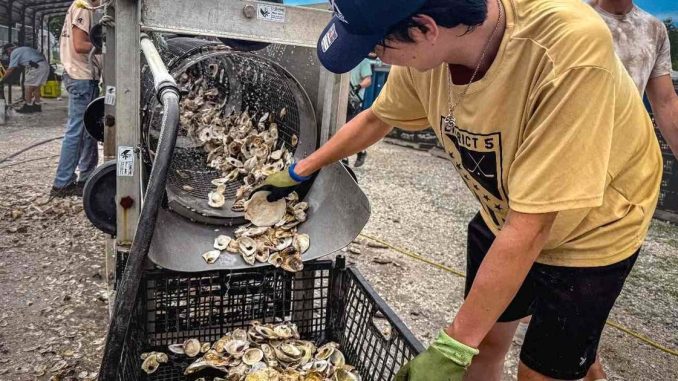
On Governor’s Island in New York City, a nonprofit organization is using discarded oyster shells to create new reefs. These reefs help clean the water in the harbor, absorb wave energy, and support local restaurants. The initiative, known as the Billion Oyster Project, aims to restore around 100 acres of historic oyster reefs by using waste from many partner restaurants. So far, the project has accomplished 20% of its goal, with impressive results. Staff members estimate that the 200 million oysters they have cultivated from 3.2 million pounds of used shells have filtered trillions of gallons of harbor water across 19 acres of newly restored reefs.
Bela Altman, who is the Volunteer Coordinator for the Billion Oyster Project, explained that oysters are considered a keystone species. This means that if oysters are thriving, the overall biodiversity in that environment is also likely to be healthy. The project operates a hatchery located in the southern area of Governor’s Island. Here, about 75 restaurants in New York City send their oyster shells instead of throwing them away in landfills. Agata Poniatowski, the education outreach coordinator for the project, noted that they collect these shells and keep them in a designated pile.
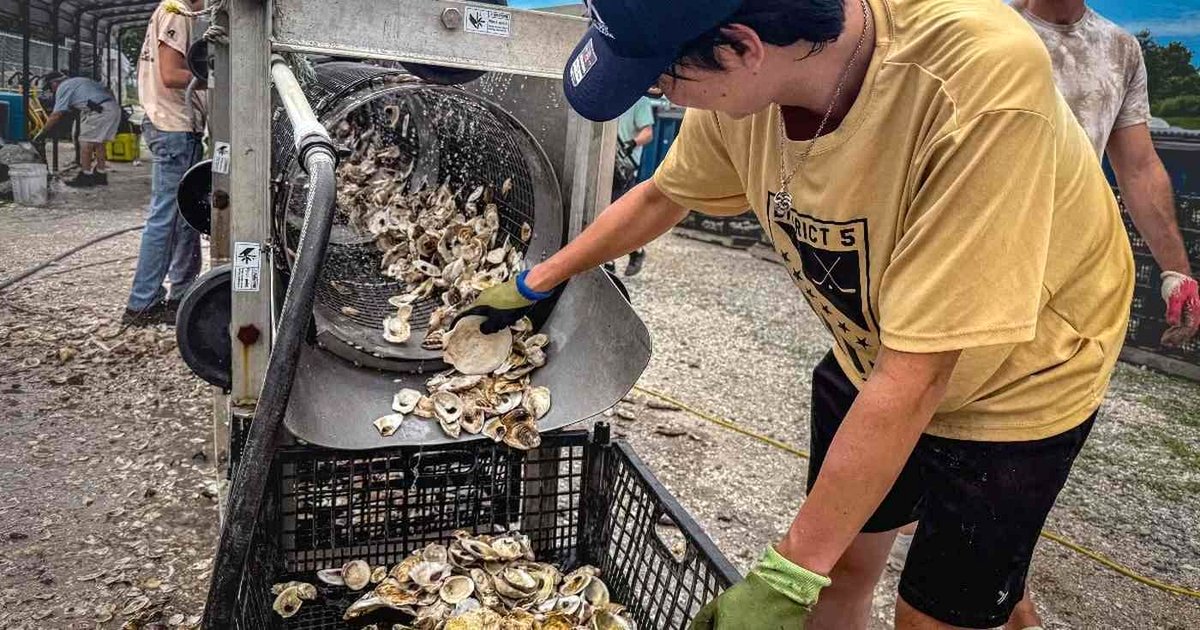
As time passes, the shells undergo a curing process. Once they are free of any bacteria, invasive species, or disease, they are moved to the hatchery. At this facility, oyster larvae are introduced to the cleaned shells so they can adapt to New York’s waters, feed, and grow. The project can raise up to 10 million baby oysters at a time, which are then transported and placed into the harbor to start their new lives.
The Billion Oyster Project began in 2008, with plans to reach its goal of one billion oysters by 2035. Achieving this milestone would greatly benefit the city. It could lower the price of oysters for diners while also creating 100 new reefs that would refresh the water in New York Harbor every three days. As climate change may increase storm severity, these oyster reefs could help reduce flooding by dispersing wave energy. What do you think about the impact of oyster reefs on the environment?
Sources:
Source: Good News Network, by Good News Network