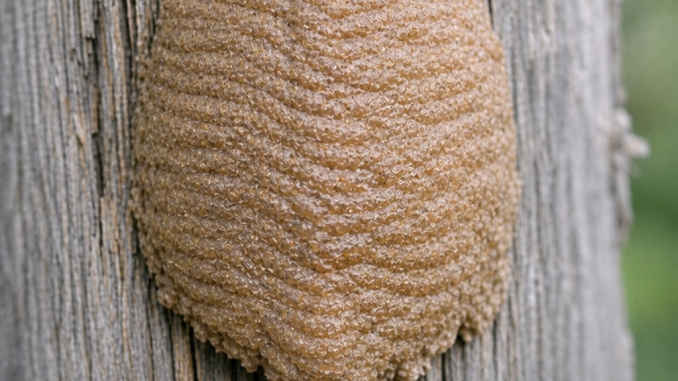
Spotting a strange, brown, foam-like lump stuck to your fence or a branch can be a bit alarming at first glance. It might seem like something that needs to be removed right away—but in many cases, it’s actually something helpful. Most likely, you’ve found an ootheca, or egg case, from a praying mantis—an important and beneficial part of your garden’s ecosystem.
What Exactly Are You Looking At?
A mantis egg case is usually tan or light brown, with a hardened, slightly foamy texture. It’s often about 1–2 inches long and attached to solid surfaces like wood, branches, or even outdoor furniture. That unusual texture serves a purpose—it protects the eggs inside from cold weather, moisture, and predators throughout the winter.
Why It’s a Good Thing to Have Around
Seeing one of these egg cases is actually a positive sign. It means your yard supports a healthy environment. Praying mantises are natural predators that feed on insects like flies, aphids, crickets, and caterpillars—many of which can harm your plants. Leaving the egg case in place helps maintain this natural pest control.
What’s Happening Inside
Inside the case are dozens, sometimes even hundreds, of tiny eggs. They stay safely enclosed during the colder months. When spring arrives and temperatures rise, the eggs hatch, and small mantises emerge—ready to hunt almost immediately.
Is It Harmful?
Not at all. Mantis egg cases are completely harmless to people and pets. They don’t sting, spread disease, or damage anything around them. In fact, removing one could reduce the number of beneficial insects in your yard.
Can You Move It If Needed?
If it’s located somewhere it might get damaged—like a gate or high-traffic spot—you can carefully relocate it:
- Cut the piece it’s attached to
- Place it in a sheltered area like a bush or garden corner
- Keep it upright and secure it gently
Avoid crushing or scraping it, as that can destroy the eggs inside.
How to Tell It Apart from Similar Things
- Mantis egg case: firm, foam-like, oval-shaped with light ridges
- Wasp nest: papery with visible hexagon cells
- Fungus: softer, uneven, often damp-looking
A Small Detail, a Bigger Story
What might look strange at first is actually a quiet part of nature at work. That little structure is home to a future generation of helpful insects. Leave it alone, and you might witness dozens of tiny mantises hatching in spring—a simple but fascinating moment that turns curiosity into appreciation.