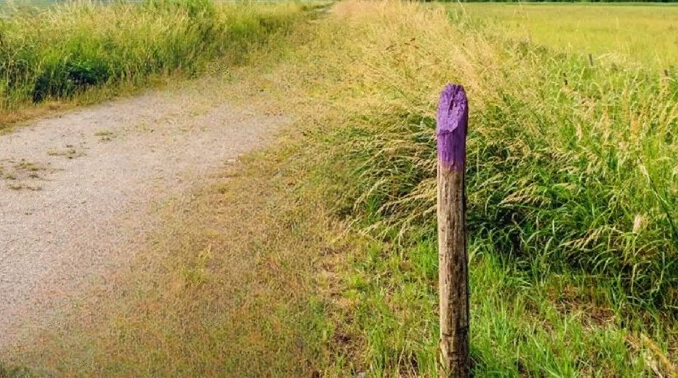
Imagine you’re taking a calm walk through a rural area or along a quiet trail. Everything looks normal—wooden fences, open land, maybe a few scattered houses. Then something catches your eye: a section of fence painted in a deep shade of purple. Not the usual colors you expect. At first glance, it might seem like a random or decorative choice. But in reality, that purple paint often carries a very clear message—no trespassing.
What may look unusual is actually a practical and, in some places, legally recognized way for property owners to mark private land. Instead of relying only on signs that can fade, break, or disappear, purple paint offers a long-lasting and highly visible alternative.
Why Purple Paint Is Used
The choice of purple isn’t random. It stands out strongly against natural surroundings like trees, grass, and soil. It’s not a color commonly used in nature or for fencing, which makes it instantly noticeable. Over time, it became associated with a specific meaning: stay off this property.
Beyond visibility, purple also carries a subtle psychological effect. It’s often linked with authority and importance, which reinforces the idea that the area is protected and should be respected.
How This System Started
The idea grew out of a simple problem. Property owners, especially in rural areas, needed a reliable way to keep people off their land without constantly replacing damaged or missing “No Trespassing” signs.
In 1997, Arkansas became one of the first places to officially recognize purple paint as a legal boundary marker. After that, several other U.S. states adopted similar laws. In those areas, purple markings can carry the same legal weight as posted signs.
Rules for Proper Purple Markings
For the paint to be effective—and in some places legally valid—it must follow certain guidelines:
- Vertical lines only
The marks should be straight vertical stripes, not random paint spots. - Correct size
Typically at least 1 inch wide and 8 inches long so they’re visible from a distance. - Right height
Usually placed about 3 to 5 feet off the ground—easy to see, but not hidden by grass or brush. - Consistent spacing
Marks are often repeated every 100 feet to clearly define the boundary.
These details help ensure that the markings are intentional and easily understood.
Where You Might See Them
Purple paint markings are most common in:
- Rural farmland
- Forested areas
- Private trails
- Fence posts and trees
In wooded areas, you might not even see a fence—just purple stripes painted directly on trees marking the property line.
Legal Importance
In states where this system is recognized, ignoring purple markings can have legal consequences. Crossing into marked land may be treated the same as ignoring a posted warning sign.
That said, not every state follows this rule. That’s why property owners are often advised to combine purple paint with traditional signage, especially in areas where the law isn’t as clear.
Why It Works So Well
The system’s strength lies in its simplicity:
- It doesn’t wear out easily
- It doesn’t fall down like signs
- It’s easy to apply and maintain
- It’s immediately visible and recognizable
For landowners, it’s a low-cost, long-term solution. For everyone else, it’s a clear signal to respect boundaries.
Bottom Line
What looks like an odd splash of color is actually a quiet but powerful message. If you ever come across a purple fence or markings on trees while exploring, it’s best to take it seriously. It’s not decoration—it’s a clear indication that the land is private and off-limits.
Understanding this simple detail can help avoid misunderstandings—and keep your outdoor adventures respectful and trouble-free.