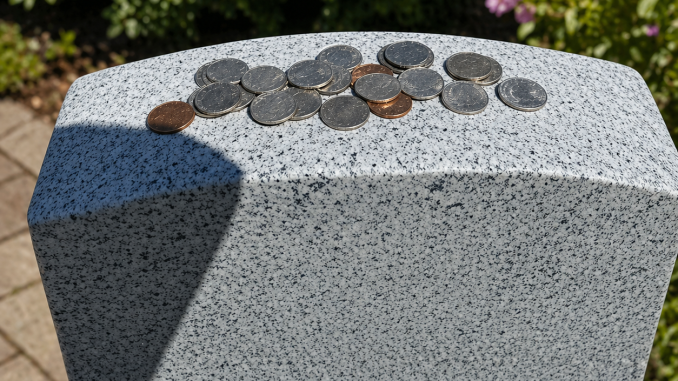
If you’ve ever walked through a cemetery—especially a military one—you may have noticed small coins resting gently on top of gravestones. At first glance, they might seem random or even accidental, as if someone simply dropped them without thinking. But in reality, this quiet act carries deep emotional meaning. It is a tradition rooted in history, respect, and human connection—one that speaks without words.
For many, these coins represent far more than spare change. They are symbols. Messages. Silent tributes left behind by those who remember, honor, and carry the stories of the fallen.
The Hidden Meaning Behind Coins on Gravestones
At its core, the act of leaving a coin on a gravestone is a way of saying, “You are not forgotten.” It’s simple, but powerful. Each coin, depending on its type, carries a specific meaning—especially within military culture.
The most common coin you’ll see is a penny. While it holds little monetary value, its symbolic meaning is deeply significant. Leaving a penny is a way of acknowledging the person buried there. It says, “I visited. I remember you.” Even if the visitor never knew the deceased personally, the gesture still honors their life and existence. It’s a quiet reminder that someone took a moment to stop, reflect, and show respect.
For families of the deceased, especially those who have lost loved ones in service, seeing pennies on a gravestone can be comforting. It reassures them that their loved one is not alone in memory—that others continue to recognize their sacrifice.
A Symbol of Shared Service and Brotherhood
A nickel carries a more personal message. When someone leaves a nickel, it typically means that they served with the deceased during their time in the military—perhaps in boot camp, training, or early service.
This coin represents a shared chapter in life. It reflects the bond formed through discipline, hardship, and mutual understanding. Military service often creates connections that last a lifetime, and even beyond. The nickel becomes a quiet acknowledgment of that shared journey—one that words often fail to fully capture.
A Deeper Bond Forged in Battle
A dime holds even greater emotional weight. It signifies that the person leaving the coin didn’t just serve with the deceased—they fought alongside them.
Combat creates a level of connection that is difficult to explain. It is built on trust, survival, and facing danger together. Those who experience it share moments that stay with them forever. Leaving a dime is a way of saying, “We stood side by side. We went through it together.”
It is a deeply personal tribute—one that reflects courage, loyalty, and the unbreakable bonds formed under the most intense circumstances.
The Most Powerful Tribute of All
The quarter carries the heaviest meaning of all. It indicates that the person leaving it was present when the soldier passed away.
This is not just remembrance—it is a connection to the final moments of someone’s life. It speaks of presence, of witnessing, of being there during the most difficult time. Whether they tried to help, stayed by their side, or simply shared that moment, the quarter represents a bond that goes beyond memory.
It is one of the most powerful and emotional gestures someone can leave behind.
More Than Symbolism: Emotional Impact on Families
For families, these coins are more than just objects—they are sources of comfort.
Imagine visiting the grave of someone you love and seeing coins placed there by others. People you may never meet. Individuals who took a moment out of their lives to honor your loved one. It creates a sense of connection. A feeling that the person who is gone is still remembered, still valued.
For many families—especially those who cannot visit often—these coins serve as a bridge between absence and remembrance.
A Practical Side to the Tradition
Interestingly, this tradition also carries a practical benefit. In some cemeteries—particularly military ones—the coins left behind are collected periodically.
Rather than being discarded, they are often donated to organizations that support veterans and their families. These contributions may seem small individually, but over time, they can add up to meaningful support for healthcare, housing, and other essential services for those who have served.
In this way, the act of remembrance also becomes an act of giving.
Historical Roots of the Tradition
The practice of leaving coins with the dead is not new. In fact, it dates back thousands of years.
In ancient Greek and Roman cultures, coins were placed on or near the body of the deceased as a form of payment for the journey to the afterlife. According to mythology, the soul needed to pay Charon—the ferryman who transported the dead across the River Styx.
While modern traditions no longer follow this belief, the symbolic act of leaving coins has remained. Over time, it evolved into a gesture of respect rather than necessity—a way to honor the dead rather than prepare them for a journey.
The Military Connection and Modern Meaning
The modern version of this tradition became especially prominent after the Vietnam War.
During that time, many veterans wanted to honor fallen comrades without drawing attention or engaging in political discussions. Leaving a coin was a subtle, respectful way to do so. It required no explanation, no ceremony—just a quiet moment of acknowledgment.
Over the years, this practice spread and became widely recognized as a meaningful way to pay tribute to those who served.
What You Should Know If You See Coins on a Grave
If you ever come across coins on a gravestone, it’s important to understand their significance.
First, do not remove them. These coins are intentionally placed as a sign of respect. Taking them away can be seen as disrespectful, even if that wasn’t the intention.
Second, take a moment to appreciate what they represent. Each coin tells a story—of memory, connection, and honor.
And finally, if you feel moved to do so, you can participate in the tradition yourself. Even a simple penny can carry a powerful message.
A Quiet, Lasting Tribute
In a world where expressions are often loud and visible, the tradition of leaving coins on gravestones stands out for its simplicity.
No words. No attention. Just a small, meaningful gesture.
Yet within that gesture lies something profound—a message of remembrance, respect, and human connection that transcends time.
So the next time you see a coin resting on a gravestone, you’ll know: it’s not случайно.
It’s a message.
A quiet way of saying, “You are remembered.”