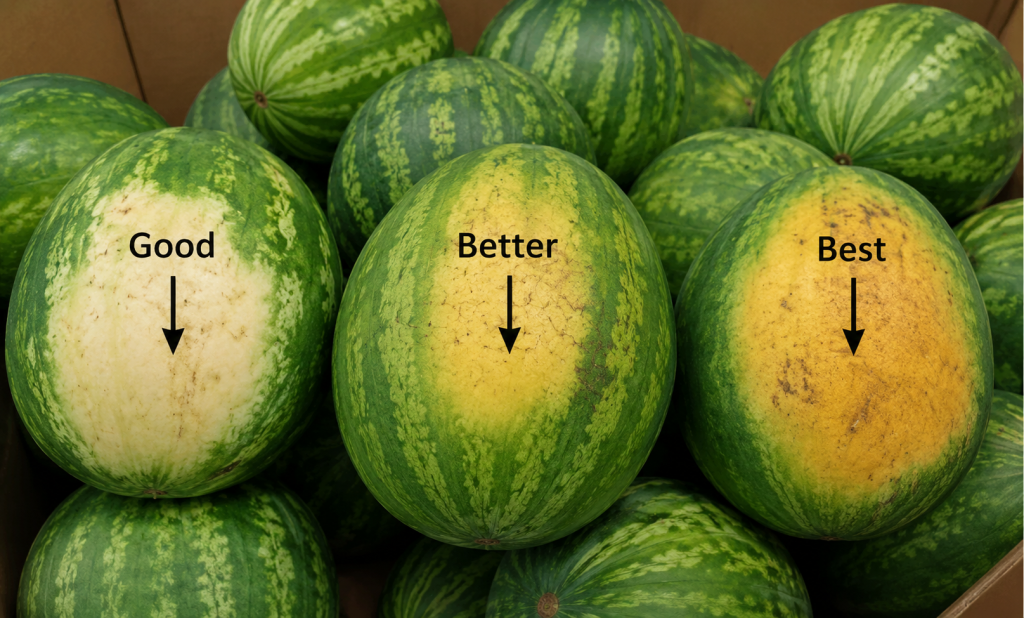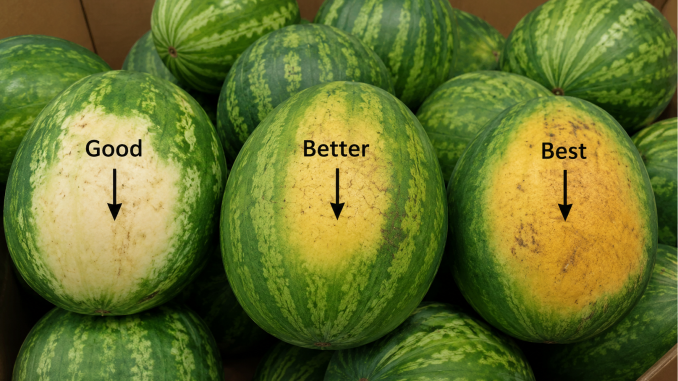
Take watermelons, for example. That creamy yellow spot on the bottom? That’s called a field spot, and it usually means the melon had enough time to ripen naturally in the sun. A deeper golden-yellow color is often a good sign, while a pale white spot may mean it was picked too early. Those brown web-like marks on the skin are also considered a positive sign because they may indicate strong pollination, which many believe leads to a sweeter melon.
A dry brown stem is another thing worth checking. If the stem is still green, the watermelon may not have fully ripened before harvest. Many people also believe that rounder watermelons tend to be sweeter, while longer ones are usually more watery.
Pineapples have their own tricks too. A ripe pineapple should have a sweet smell near the bottom and feel slightly firm with just a little softness. If it smells sour or overly sweet, it may already be going bad. And if the leaves in the center pull out too easily, it could be overripe.
Cantaloupes are easier once you know what to look for. Avoid any with soft spots, mold, or too much green coloring. A ripe cantaloupe should feel heavy for its size and have a light sweet smell. The blossom end should give slightly when pressed, but not feel mushy.
At the end of the day, choosing good fruit is all about noticing the little details — smell, weight, color, texture, and even those strange marks on the skin. Once you know what to watch for, your chances of bringing home sweet, juicy fruit get a whole lot better.