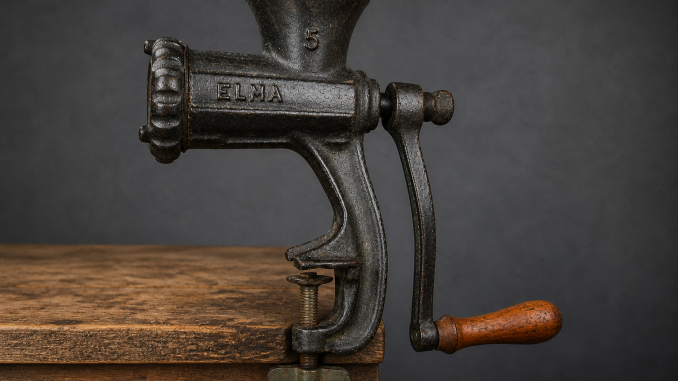
At first glance, this heavy, metal device might look confusing—almost like a strange mechanical object from another era. But for older generations, it was once an essential part of everyday life in the kitchen.
This is a manual meat grinder, also known as a hand-crank meat mincer.
Before electric appliances became common, tools like this were used in homes all over the world—especially from the late 1800s through the mid-1900s. Brands like ELMA, which you see on this model, were known for producing durable, cast-iron kitchen tools that could last for decades.
How Did It Work?
The grinder would be attached firmly to the edge of a table or countertop using the clamp at the bottom. Meat—or sometimes vegetables—would be placed into the funnel-shaped opening at the top.
When the user turned the handle on the side, an internal screw (called an auger) would push the food forward toward a rotating blade. The blade would chop the meat and force it through a metal plate with small holes, producing finely ground meat on the other side.
It was simple, effective, and required no electricity.
What Was It Used For?
This tool had many uses in the kitchen:
- Grinding fresh meat for sausages, burgers, and meatballs
- Preparing homemade minced meat dishes
- Processing vegetables for sauces or spreads
- Even making pet food in some households
In many homes, especially in rural areas, families preferred grinding their own meat to ensure freshness and quality.
When Was It Popular?
Manual meat grinders were most commonly used between the early 1900s and the 1960s, before electric grinders and food processors became widely available. Even after that, many people continued to use them because they were reliable and didn’t depend on power.
In fact, during times when electricity wasn’t available or reliable, tools like this were not just useful—they were necessary.
Why Is It Rare Today?
Today, electric kitchen appliances have replaced most manual tools. They are faster and require less effort. Because of that, many younger people have never seen or used a hand-crank grinder like this.
However, these vintage tools are still appreciated by collectors, chefs, and people who enjoy traditional cooking methods.
A Piece of History
More than just a kitchen tool, this grinder represents a time when things were made to last and when preparing food required more time, effort, and skill.
For those who recognize it, it brings back memories. For those who don’t—it’s a small mystery from the past.