“With your patient,” he gently corrected.
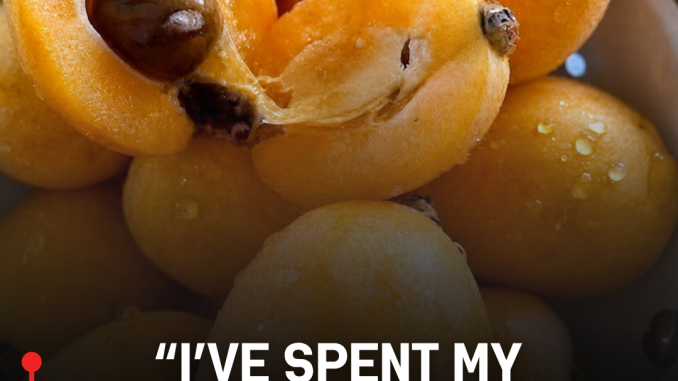
My breath caught. The irony was almost painful. Only weeks earlier, I had been sitting on our grandmother’s porch, peeling sweet, golden loquats for my sister while watching her struggle to remove their large, glossy brown seeds. She always said those seeds reminded her of the burdens we were never meant to carry.
And now I was standing in a cold hospital hallway, facing the aftermath of the woman who had finally learned what it meant to let go.
The chief physician, a man whose presence seemed to command the entire sterile hospital hallway, looked at me.
“Your sister. Elena.”
He paused before continuing.
“Elena is responding remarkably well. Her injuries from the fall are stabilizing, but she’s understandably shaken by everything that happened—and by the realization of just how strong she actually is.”
I glanced toward the closed door of her room.
For years, I had been the caretaker sister. The responsible one. The one expected to keep our family’s secrets, carry everyone else’s burdens, and quietly accept my place in the background.
It suddenly felt like I had spent my entire life reading from a script someone else had written.
The doctor continued.
“Your initial intervention at the orchard was excellent. Whoever stabilized her after the fall clearly knew exactly what they were doing.”
My family shifted uneasily.
For years, they had dismissed my professional ambitions. They treated me like the supportive sister and used Elena’s fragile health as another reason to keep both of us trapped in roles we had never chosen.
The doctor looked around the room.
“Whoever did it?”
I answered quietly.
“I did.”
He smiled.
“I know.”
Then his expression became serious.
“And apparently, no one thought to mention that you’re a chief trauma surgeon.”
The room went completely silent.
My family stared at me.
Their eyes moved toward my hands—the same hands that had been covered in sticky loquat juice earlier that day, the same hands that had spent years caring for my sister, and the same hands that had just kept her alive after the fall.
My aunt finally spoke.
“You’re a surgeon?”
“Yes.”
“For how long?”
“Eleven years.”
The words seemed to hang in the air.
Eleven years.
For eleven years, while they made jokes about my career and told people I was simply the sister standing beside Elena, I had been working in trauma centers, treating the critically injured and saving lives.
I had never needed applause for it.
But apparently, they had needed me to stay small.
The doctor closed Elena’s chart.
“Actually, Dr. Claire, I was looking for you because there’s something else you should know.”
I looked at him.
“Elena woke up. She keeps asking about the sister who taught her how to let go of the seeds.”
I hesitated before following him through the doors.
Elena looked fragile in the hospital bed, but her eyes still carried the same spark I had seen the first time she tasted a perfectly ripe loquat.
When she saw me, she whispered one word.
“You.”
“Hey, El.”
Her eyes filled with tears.
“You were there.”
Her voice trembled.
“You saved me. Again.”
I sat beside her, holding her hand.
And in that moment, something inside me finally became clear.
For years, I had chased my family’s approval. I had believed that if they could finally see me for who I was, everything would somehow make sense.
But I realized I had been waiting for something I never needed.
Permission.
I had survived years of being the responsible one. I had endured their judgment and their jokes. I had watched them reduce my life to the role of Elena’s caretaker.
But somewhere along the way, I had allowed their opinions to become the limits of my own identity.
No more.
I thought about the people I had always admired—the legendary stars who remained brilliant long after the world expected them to fade. They never waited for someone else to tell them they still mattered.
They simply continued to become who they were meant to be.
When I returned to the waiting room, my family was waiting.
My aunt looked at me with tears in her eyes.
“We owe you an apology.”
I said nothing.
“We spent years making jokes about your career. We were jealous. Everyone praised you, and instead of being proud of you, we tried to make you smaller.”
I looked at them calmly.
“I never needed you to make me smaller,” I said. “I only needed you to see the truth. But I understand now that I don’t need you to see it for me to become who I am.”
No one answered.
For the first time, their silence didn’t hurt.
That night, as I walked out of the hospital, I looked up at the stars.
I realized how much of my life I had spent waiting for permission to become the woman I already was.
Not just a sister.
Not just a caretaker.
Not just a survivor.
I was a doctor.
A trauma surgeon.
A woman who had saved a life.
And a woman who had finally learned to save herself.
I was no longer living in the shadow of my sister’s fragility.
I was no longer waiting for the fruit to ripen before allowing myself to reach for it.
The seeds had always been there.
The burdens had always been there.
But so had the choice to let them go.
And as I walked beneath the quiet night sky, I finally understood something I should have known all along:
Your identity is not something other people give you.
It is something you choose, something you build, and something no one has the power to take away.
For the first time in my life, I wasn’t asking for permission.
I was simply living as myself.