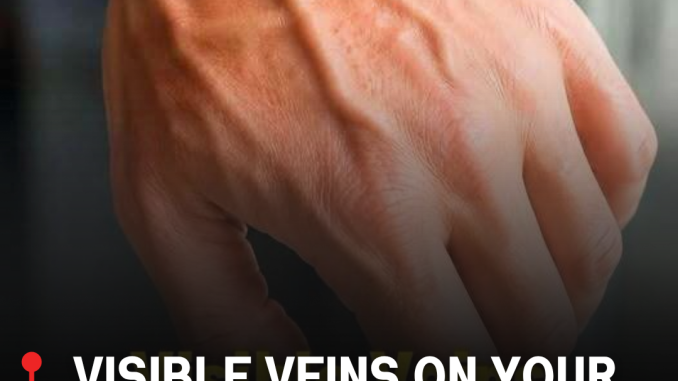
You glance down at your hands and suddenly notice something different—blue, bulging veins standing out beneath your skin. It’s easy to dismiss them as a normal part of aging, the result of exercise, or even the summer heat. But in some cases, those visible veins may be more than a cosmetic change. They can occasionally signal that something deeper is happening within your circulatory system. While prominent veins are often harmless, certain changes should never be ignored.
For many people, visible hand veins are completely normal. Genetics, low body fat, skin tone, hydration, and physical activity all influence how noticeable veins appear. As we get older, our skin naturally becomes thinner and loses collagen and elasticity. With less tissue covering them, veins, tendons, and bones become more visible, making this a common and expected part of aging.
However, your body has its own way of communicating when something isn’t right. A gradual increase in vein visibility over many years is usually nothing to worry about. On the other hand, veins that suddenly become enlarged or are accompanied by discomfort may deserve medical attention. A sudden change can sometimes be your body’s way of signaling that your circulatory system is under stress.
Pay attention to how the vein feels as well as how it looks. If a vein becomes firm, rope-like, or painful to the touch, especially if the surrounding area feels warm or appears red, it could indicate inflammation or the formation of a blood clot. A condition known as phlebitis, or vein inflammation, can develop due to injury, restricted blood flow, or other underlying health issues. These symptoms shouldn’t be ignored and should be evaluated by a healthcare professional.
Your veins can also provide clues about your overall cardiovascular health. Because the circulatory system works as one connected network, problems affecting blood flow or heart function can sometimes become visible in the veins. In more serious situations, chronic venous insufficiency or reduced heart function may cause blood to back up, increasing pressure within the veins. If your hands remain swollen or your veins stay enlarged long after physical activity or warm weather has passed, it may be worth discussing these symptoms with your doctor.
The goal isn’t to panic—it’s to stay aware. Many people become anxious after noticing a new vein, but stress alone can temporarily raise blood pressure and make veins appear even more noticeable. Instead of jumping to conclusions, observe the changes carefully. Ask yourself whether the swelling only appears after standing for long periods, whether discomfort improves after elevating your hands, or whether the skin has become discolored. These details can help your healthcare provider determine whether the changes are harmless or require further evaluation.
Maintaining healthy veins begins with simple daily habits. Regular movement plays a vital role in circulation because your muscles help pump blood back toward the heart. Sitting for extended periods forces your veins to work harder than they were designed to. Staying well hydrated is equally important, as dehydration can reduce blood volume and make blood thicker, increasing the workload on your heart and blood vessels.
Smoking remains one of the greatest threats to vascular health. Chemicals found in tobacco damage the inner lining of blood vessels, contributing to plaque buildup and reduced circulation over time. Quitting smoking not only benefits your lungs but also gives your blood vessels an opportunity to heal and function more efficiently.
Protecting your circulatory system also means maintaining a healthy weight, managing blood sugar levels, staying physically active, and following a balanced lifestyle. These habits support healthy blood flow and reduce strain on your veins and heart.
Most visible hand veins are simply a normal part of life and aging. However, if you notice sudden changes, persistent swelling, significant pain, warmth, redness, or veins that become unusually hard, don’t ignore them. A timely medical evaluation can identify whether the issue is minor or the early sign of a more serious condition.
Your hands can reveal more than you might expect. By paying attention to changes and taking care of your vascular health, you give yourself the best opportunity to prevent problems before they become more serious. Sometimes, the smallest visible changes can provide the earliest clues that your body needs a little extra attention.