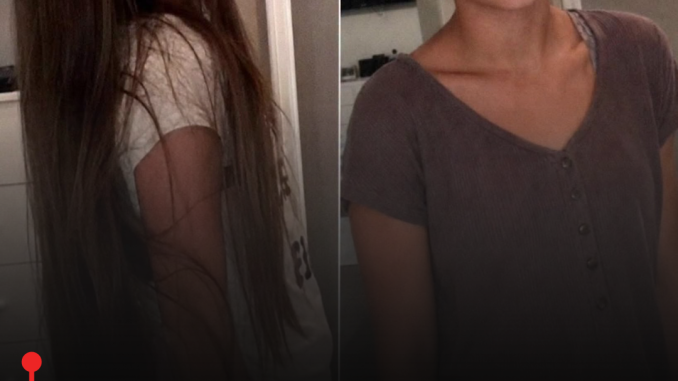
Introduction: When a Sunday Night Tradition Was Broken
For years, my life had been ruled by a predictable, exhausting routine. I was a professional first and a mother second, constantly convincing myself that the sacrifices I made were necessary for our family’s future. My daughter, Emily, understood—or at least tried to. Still, I could often see the quiet disappointment in her eyes.
There was only one tradition I never allowed myself to miss: Sunday nights.
We would sit together on the carpet while I brushed her long, chestnut-colored hair. It was the one time each week when everything else seemed to disappear. No emails. No deadlines. No meetings. Just me and my daughter.
Then, one Monday afternoon, everything changed.
Emily came home from an outing with my mother-in-law, Linda, wearing an oversized hoodie pulled tightly over her head. When I finally persuaded her to take it off, my heart sank.
The long hair I had carefully brushed the night before was gone.
Instead, she had a short, uneven pixie cut, with jagged pieces sticking out in every direction.
Emily refused to tell me what had happened. She only cried and whispered, “Ask Grandma.”
I confronted Linda immediately, expecting an apology.
Instead, she gave me an ultimatum.
“Come to the school concert tomorrow night,” she said. “She’ll explain everything herself.”
The Note That Changed Everything
The following day, during one of the rare moments I was actually home, I noticed Emily’s backpack lying near the kitchen table.
Inside, I found a crumpled piece of paper.
The message written across it made my stomach drop:
“Let’s see if you’ll still think it’s so funny without your hair.”
I read it twice.
My daughter hadn’t simply gotten a bad haircut.
Someone had deliberately targeted her.
Suddenly, all the times I had been too busy to notice what was happening in her world came rushing back.
That afternoon, my boss, Melissa, called and told me I needed to return to work.
For the first time in twelve years, I didn’t automatically agree.
I looked at the note in my hand and realized something painful: I had spent years filling my daughter’s life with empty chairs.
I had missed recitals, school events, conversations, and countless ordinary moments because I always believed work couldn’t wait.
So I made a decision.
I texted my boss:
“I’m not coming in.”
For once, I chose my daughter first.
The Concert
The next evening, I quietly slipped into the back of the school auditorium just as the lights began to dim.
Then I saw Emily onstage.
Her hair was still painfully short.
But she wasn’t alone.
Standing beside her was her best friend, Maya, whose hair had been cut into the exact same uneven style.
The choir’s traditional “thank you” segment began, and Emily stepped toward the microphone.
She didn’t talk about her own haircut.
She talked about Maya.
Emily explained that bullies had deliberately gotten gum tangled in Maya’s hair, forcing her to cut it off. Maya had been devastated and terrified that everyone at school would laugh at her.
“She was scared to come back,” Emily said, her voice trembling but steady. “So she asked me if I would cut mine too.”
Emily paused.
“I told her yes.”
The auditorium went completely silent.
Even the students who had been laughing in the back row suddenly had nothing to say.
The cruelty that had been hidden was no longer a secret. There was a victim, a witness, and now, the truth.
When the performance ended, the principal was waiting near the doors for the students responsible.
The Empty Chair
Afterward, I found Linda in the parking lot.
For years, I had secretly resented her. I thought she was trying to take my place in Emily’s life.
But standing there that night, I finally understood.
She wasn’t competing with me.
She had simply been there when I wasn’t.
“I was never trying to replace you, Rachel,” Linda said quietly. “I was just standing in the empty chair.”
Those words stayed with me.
That night, Emily looked at me with cautious hope.
“Are you going to get fired because you chose me?” she asked.
I told her that I might.
She nodded, and I pulled her close.
For the first time, I wasn’t thinking about the consequences.
I was thinking about how many moments I’d already missed.
A Different Kind of Success
Nothing magically became perfect after that night.
I didn’t suddenly find the perfect job. My career didn’t transform overnight. The deadlines didn’t disappear.
But something inside me had changed.
I finally understood that a career can be rebuilt.
A missed childhood moment cannot.
Jobs can replace employees. Companies can move on. Deadlines can be extended.
But your child only gets one childhood.
As I tucked Emily into bed that night, she looked at me and smiled.
“I’ll see you tomorrow,” she whispered.
I kissed her forehead.
“No,” I told her. “I’ll be there before you are.”
And this time, I meant it.
Because I had finally learned that being present isn’t about finding more time.
It’s about deciding what deserves the time you already have.