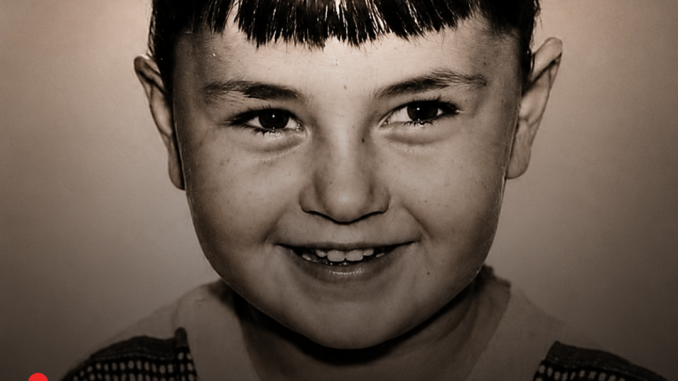
For millions of Americans, Roseanne Barr once represented something television rarely showed honestly: real working-class struggle. Long before social media outrage, cancellations, and public scandals dominated headlines, she became famous for portraying exhausted mothers, underpaid workers, and families trying to survive paycheck to paycheck.
Her sitcom Roseanne was not polished or glamorous. That was exactly why audiences connected with it.
People saw themselves in her blunt humor, sharp sarcasm, and refusal to pretend life was perfect.
But over time, the same rebellious personality that made Roseanne Barr famous also became the source of her downfall. What began as fearless honesty slowly evolved into years of controversy, public backlash, and self-destruction that ultimately changed how many people viewed her forever.
A Difficult Childhood in Utah
Roseanne Barr was born on November 3, 1952, in Salt Lake City, Utah. She grew up in a Jewish family at a time when openly expressing that identity was not always easy in her community.
Barr later spoke publicly about growing up feeling isolated and misunderstood. Her childhood was shaped by family tension, emotional struggles, and severe health problems. When she was still young, she suffered a devastating car accident that reportedly caused traumatic brain injuries and dramatically affected her mental and emotional state for years afterward.
Comedy eventually became her escape.
Before becoming a television star, Barr worked ordinary jobs and raised children while performing stand-up comedy in small clubs. Unlike many comedians of the era, she did not present herself as glamorous or polished. Instead, she embraced the identity of the frustrated, overworked American housewife.
Audiences loved it because it felt real.
The Rise of Roseanne
During the 1980s, Roseanne Barr’s comedy career exploded. Appearances on major television programs helped her gain national attention before ABC launched the sitcom Roseanne in 1988.
The show became one of the biggest television hits of its time.
Unlike many sitcom families that appeared wealthy and carefree, the Conner family struggled financially, argued constantly, and dealt with everyday stress. That realism made the show groundbreaking.
For many viewers, Roseanne represented women who felt invisible in American culture — mothers balancing work, bills, exhaustion, and family pressure without recognition.
Barr won both an Emmy and a Golden Globe for her performance.
At the peak of her fame, she became one of the most powerful women in television.
Fame, Anger, and Growing Controversy
Even during her most successful years, controversy followed Roseanne Barr closely.
She became known for public feuds, unpredictable interviews, and behavior that often shocked audiences. One of the earliest major incidents came in 1990 when she performed the U.S. national anthem in a deliberately exaggerated and mocking style during a baseball game, creating nationwide outrage.
Over the years, controversies continued to grow.
Critics accused her of making offensive comments, spreading conspiracies online, and deliberately provoking public anger. Her social media activity increasingly overshadowed her entertainment career.
Some supporters defended her as someone who simply refused to follow Hollywood expectations. Others believed her behavior crossed ethical and social lines repeatedly.
Either way, Roseanne Barr remained impossible to ignore.
The Historic Comeback That Collapsed Overnight
In 2018, something remarkable happened.
ABC revived Roseanne, and the reboot became an enormous ratings success almost immediately. Millions of viewers tuned in, proving that Barr still had a loyal audience decades after the original series ended.
For a brief moment, it appeared one of television’s biggest comeback stories was underway.
Then everything changed.
In May 2018, Barr posted a tweet about Valerie Jarrett, a former adviser to President Barack Obama, that was widely condemned as racist. The backlash was immediate and massive. ABC canceled the show within hours, calling the comments unacceptable and inconsistent with the network’s values.
The cancellation stunned Hollywood.
Barr later apologized and described the tweet as a “bad joke,” but the damage was already done.
Soon afterward, the remaining cast continued without her in a spin-off series titled The Conners.
A Legacy Divided
Today, Roseanne Barr remains one of the most polarizing figures in American entertainment.
To some people, she is still remembered as a groundbreaking comedian who gave working-class families a voice rarely seen on television. To others, her later years became defined by anger, conspiracy theories, offensive remarks, and public controversy.
Her story is both a rise-to-fame success story and a cautionary tale about celebrity, social media, and self-destruction in the modern era.
Very few entertainers have experienced both extremes so dramatically — becoming beloved by millions while simultaneously alienating much of the audience that once supported them.
Roseanne Barr’s life continues to spark debate not simply because of what she achieved, but because of how quickly public admiration transformed into division and outrage.
In many ways, her story reflects the changing nature of fame itself in the digital age — where one voice can inspire millions, but one moment can redefine an entire legacy forever.