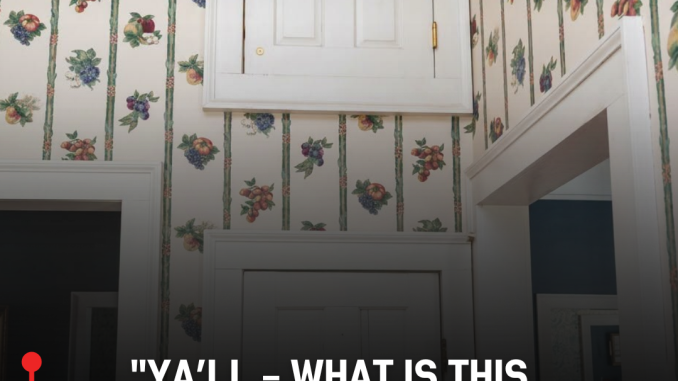
If you’ve ever explored an older home or visited a historic building, you may have noticed an unusual feature: a small built-in cabinet positioned high above a doorway, tucked into a wall, or placed just beyond easy reach. These cabinets often had one or two shelves, and many were surprisingly left without doors.
At first glance, they might appear impractical or simply like an odd architectural detail. But these elevated storage spaces often served a very practical purpose. They allowed homeowners to make use of otherwise wasted space, keep rarely used belongings out of the way, and, in some historical settings, potentially avoid certain taxes or regulations associated with traditional storage areas.
In an era before oversized closets, walk-in pantries, and large storage rooms, homeowners had to be creative. Every available inch mattered. High cabinets were one clever solution to that problem, turning awkward areas into useful storage while keeping the main living spaces uncluttered.
Let’s take a closer look at how these forgotten cabinets were used, why they became popular, and why their clever design still makes sense today.
Vintage Storage Hacks: Making Every Inch Count
Long before modern closets, expansive garages, and large storage rooms became common, people had to find creative ways to organize their belongings. Homes were often smaller, and storage space could be limited, so unused corners and vertical areas were valuable.
One clever solution was to build high cabinets above doors, near ceilings, or inside otherwise awkward wall spaces. These areas were perfect for belongings that weren’t needed every day.
Storage for Seasonal Items
One of the most practical uses for these cabinets was storing seasonal belongings. Items such as luggage, extra blankets, heavy quilts, holiday decorations, and off-season clothing could be placed high above everyday living areas.
Because these items were only needed occasionally, there was little reason for them to occupy easily accessible storage.
Imagine a family preparing for winter. Instead of keeping bulky quilts and extra blankets in a closet all year, they could store them in an elevated cabinet and retrieve them when temperatures dropped. The rest of the time, valuable closet and drawer space remained available for everyday necessities.
The same principle could be applied to holiday decorations, travel bags, special serving dishes, or other belongings that were useful but rarely needed.
It was a simple approach: put the things you rarely use in the places you rarely need to reach.
Making Better Use of Vertical Space
Modern homes often provide plenty of storage options, but older homes frequently required more creativity. Vertical space could be just as valuable as floor space.
The area above a doorway, for example, might otherwise serve no practical purpose. Adding a shallow cabinet or shelf transformed that unused space into functional storage without taking up additional floor area.
This was especially useful in smaller homes where every inch mattered.
High cabinets could hold belongings that would otherwise contribute to clutter, while keeping frequently used items within easier reach. They were essentially an early version of the vertical-storage solutions that are popular in small apartments and compact homes today.
The Fascinating Connection to Historical Taxes
There is another part of the story that makes high cabinets particularly interesting: historical taxes and regulations surrounding household space.
The exact rules varied by country and period, so the idea should not be treated as a universal explanation for every high cabinet found in an old home. However, historical taxes on aspects of housing, including windows, rooms, and certain forms of household space, encouraged homeowners and builders to think carefully about how their homes were designed.
In some situations, people looked for ways to gain practical benefits without creating features that could be treated as taxable luxury space.
This is where elevated and sometimes open storage could become especially useful.
A Clever Alternative to Conventional Storage
Traditional closets could be larger, enclosed, and more architecturally significant. A simple shelf or shallow storage area above a doorway was much less intrusive.
Rather than constructing another full storage room or dedicating valuable floor space to a large closet, homeowners could use an otherwise wasted area.
The result was a clever combination of practicality, economy, and efficient design.
That doesn’t mean every high cabinet was specifically built to avoid taxes. In many cases, its primary purpose was simply storage. But historical housing regulations undoubtedly influenced the way people thought about space, construction, and household conveniences.
Why High Cabinets Still Make Sense Today
Although these cabinets may look old-fashioned, the basic idea behind them is surprisingly modern.
Today, homeowners and apartment dwellers are once again looking for ways to maximize limited space. Small apartments, studio homes, tiny houses, and compact kitchens all benefit from making better use of vertical areas.
A high cabinet can provide storage without making a room feel crowded.
Putting Unused Spaces to Work
Many homes contain areas that are rarely used:
- Above doorways
- Above kitchen cabinets
- Along tall walls
- Beneath ceilings
- Inside awkward corners
- Above built-in furniture
Instead of leaving these areas completely empty, they can be turned into useful storage.
High cabinets are particularly suitable for things that aren’t needed frequently, including:
- Seasonal clothing
- Holiday decorations
- Extra blankets
- Luggage
- Serving dishes
- Small kitchen appliances
- Books and collectibles
- Keepsakes
The key is choosing items that don’t need to be accessed every day.
The Modern Appeal of High Storage
Interior designers and homeowners have increasingly embraced the idea of using vertical space, particularly in smaller homes.
High cabinets can provide additional storage while keeping countertops, floors, and closets less cluttered. They can also blend into the architecture of a room instead of appearing like bulky pieces of furniture.
For minimalist interiors, this can be especially appealing. Items can be stored neatly out of sight while the main living area remains clean and open.
In a small apartment, a few feet of unused wall space can make a surprising difference.
A Forgotten Design Idea With a Modern Lesson
The story of high cabinets is ultimately about more than storage.
These small architectural features demonstrate how people in the past approached a problem that homeowners still face today: how do you fit everything you need into the space you have?
Their solution was simple. Look upward.
Instead of expanding the footprint of the home, they found ways to use space that was already there. Instead of allowing awkward areas to remain empty, they turned them into useful storage.
That kind of resourcefulness remains valuable, regardless of how large or modern a home may be.
The Charm of a Forgotten Feature
Today, a high cabinet in an older home might initially look strange or unnecessary. But once its potential purpose is understood, it becomes a fascinating reminder of how thoughtfully older homes were sometimes designed.
These cabinets could provide discreet storage, reduce clutter, and make use of spaces that would otherwise have gone completely unused. In some historical contexts, the way storage was designed may also have been influenced by taxation and building practices.
Whether built above a doorway, tucked into a wall, or positioned near the ceiling, these forgotten storage spaces reveal an important principle that has never really gone out of style:
Every square inch of a home has potential.
Modern technology may have given us smarter appliances and larger storage systems, but the basic idea remains the same. Sometimes the smartest solution is also the simplest—use the space you already have.
And that is what makes these old high cabinets so fascinating. They aren’t merely relics of another era. They are small examples of human ingenuity, practicality, and the timeless search for a better way to organize the home.