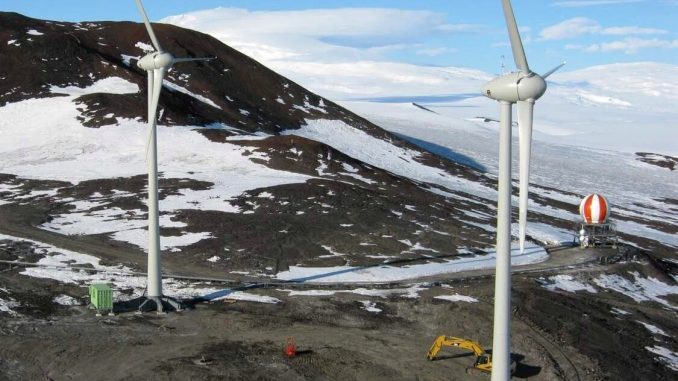
The three wind turbines on Ross Island in Antarctica have made a significant impact on energy use since they were built between 2008 and 2009. These turbines have helped save around 122,000 gallons of diesel fuel and the costs related to transporting the fuel. They provide power to McMurdo Station in the U.S. and Scott Base in New Zealand, proving that renewable energy can function in extreme conditions.
The project was developed by Meridian Energy, a company from New Zealand. They faced many challenges when designing the wind farm. For years, both research bases relied solely on diesel generators for energy, and shipping fuel to such a remote location was costly. To ensure success in the harsh Antarctic conditions, Meridian created a unique design for the turbines.
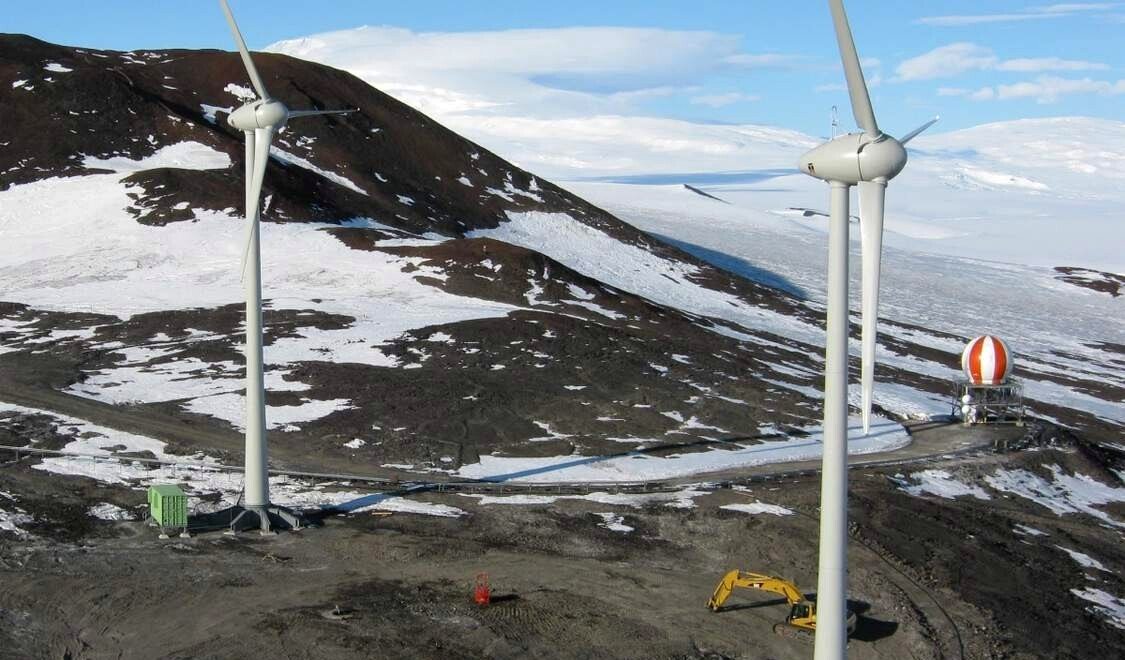
Each turbine was firmly secured to Ross Island’s Crater Hill, with legs drilled into concrete blocks made of a special mixture that solidifies in cold temperatures. These turbines are built to handle severe winds and operate without transmissions, which helps avoid issues with oil movement and minimizes the number of moving parts. The turbines can withstand extremely low temperatures, even as low as -30°C.
The only ships that deliver supplies to Ross Island come at the end of the Antarctic summer. This meant that the turbines had to be small enough to fit in shipping containers for assembly. Despite this limitation, the Enercon E33 turbines, each capable of generating 330 kilowatts, have operated effectively for 15 years. On rare occasions when the wind is weak, they rely on diesel generators for additional power.
As part of an agreement between the U.S. and New Zealand, these turbines will be replaced with larger ones that include battery storage by 2030. During the 2024/25 season, construction teams began work on the foundation for one of the new turbines. The wind farm has helped scientists at Scott and McMurdo reduce their operating costs while also cutting down carbon emissions, preventing an estimated 1,200 tons of CO2 from entering the atmosphere.
What do you think about renewable energy solutions in extreme conditions?
Sources:
Source: Good News Network, by Andy Corbley