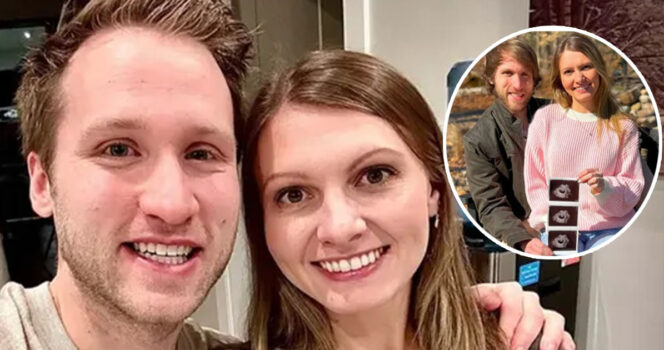
Jesse and Ashley Ridgway, who had previously announced their pregnancy with excitement under the caption “Baby Ridgway – Coming fall 2026,” later updated their followers with a far more controversial message. After receiving genetic test results indicating their unborn child had Down syndrome, the couple shared that they had made the “difficult decision to terminate” the pregnancy.
In his statement, Jesse explained that while he initially believed they could manage any challenges, his perspective changed after consulting with family members, medical professionals, and genetic counselors. He said he came to understand the condition more deeply and described Down syndrome as “not a blessing” and “objectively difficult from a health perspective,” adding that he believed it could involve significant lifelong medical and caregiving needs.
He also referenced statistics suggesting a high rate of pregnancy termination following a Down syndrome diagnosis, though figures vary widely by source.
Their comments quickly ignited backlash across social media. Many users criticized the wording used in the announcement, especially the phrase “Baby Ridgway – Murdered June 2026,” which appeared in online commentary, and pushed back against the idea that individuals with Down syndrome are not valuable or meaningful lives. Others shared personal experiences, emphasizing that people with Down syndrome can lead fulfilling lives and bring joy to their families and communities.
One mother, responding directly to the controversy, argued that people with Down syndrome should not be viewed as mistakes or burdens, but as individuals with dignity, potential, and worth.
Kandi Pickard, CEO of the National Down Syndrome Society and mother of a teenage son with Down syndrome, also responded publicly. She strongly disagreed with the characterization of Down syndrome as “not a blessing,” stating that many families and individuals report positive, fulfilling lives. She acknowledged that receiving such a diagnosis can be overwhelming, but emphasized the importance of accurate and balanced information for expectant parents.
Medical professionals also weighed in, noting that pregnancy decisions following a diagnosis are deeply personal and often emotionally complex. One OB-GYN emphasized that such situations should not be reduced to online arguments or simplified moral judgments, highlighting that every family’s circumstances and capacity are different.
The situation has continued to fuel a broader conversation online about disability, reproductive choices, and how society discusses genetic conditions.