The courtroom in Collin County was filled with a silence that felt almost overwhelming.
Every face reflected the weight of the moment as jurors prepared to deliver a verdict that would permanently affect two families whose lives had already been changed forever.
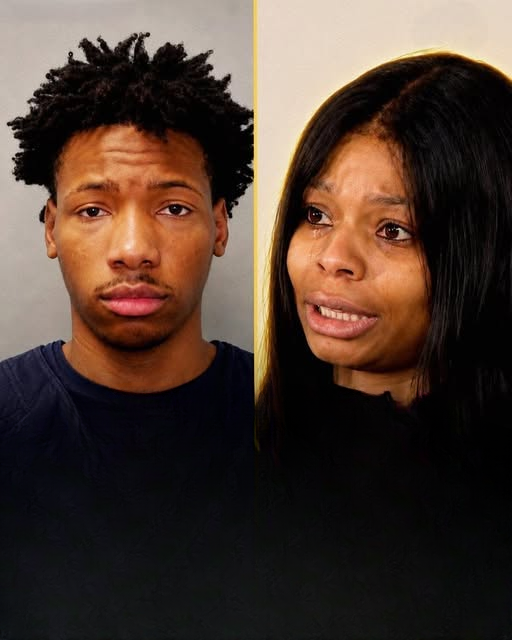
When the decision was finally announced, 19-year-old Karmelo Anthony was found guilty of murder.
In an instant, years of uncertainty came to an end, but the pain remained for everyone involved.
When a Verdict Brings No Victory
Some courtroom decisions bring celebration or relief.
This was not one of them.
As the verdict was read, the room remained quiet. There were no cheers, no visible triumphs—only the reality that one young life had been lost and another would now spend decades facing the consequences of a single tragic moment.
For Austin Metcalf’s family, the verdict confirmed a loss they have carried every day since his death.
For Karmelo Anthony’s family, it marked the beginning of a difficult new chapter.
A Tragic Incident at a School Track Meet
The case stemmed from events that occurred on April 2, 2025, during a high school track meet at Kuykendall Stadium in Frisco, Texas.
According to testimony presented during the trial, a disagreement began inside an athlete tent after Karmelo Anthony sat in an area designated for another school’s team.
Austin Metcalf asked him to move.
Witnesses described a confrontation that escalated rapidly.
What started as a disagreement quickly turned into a tense exchange. Voices were raised, emotions intensified, and within moments the situation became physical.
According to testimony, Austin pushed Anthony during the confrontation.
Anthony then used a knife.
The injury proved fatal, and despite efforts by emergency responders, Austin Metcalf later died at the hospital.
His twin brother, Hunter Metcalf, witnessed the aftermath and has spoken about the profound impact the tragedy has had on his life.
Two Different Versions of the Same Moment
Throughout the trial, attorneys presented sharply different interpretations of what happened.
The defense argued that Anthony acted out of fear and believed he was facing a threat in the heat of the moment.
Prosecutors argued that the use of deadly force was unjustified and that the confrontation should never have resulted in a fatal outcome.
Jurors ultimately sided with the prosecution’s argument and returned a guilty verdict.
A Mother’s Emotional Plea
During sentencing, attention shifted from legal arguments to the personal consequences of the case.
Family members from both sides addressed the court.
Karmelo Anthony’s mother, Kayla Hayes, delivered an emotional plea for mercy, asking the court to remember the son she had raised before he became known through headlines and court proceedings.
Her remarks reflected the pain of a mother watching her child face a future defined by imprisonment.
Across the courtroom, Austin Metcalf’s loved ones spoke about the devastating absence left behind by his death.
Hunter Metcalf remembered his brother not as a case or a headline, but as a person whose future was taken away far too soon.
The Sentence
The court sentenced Karmelo Anthony to 35 years in prison, with parole eligibility subject to Texas law.
As the sentence was announced, emotions remained mixed and complex.
For one family, it represented accountability.
For the other, it represented another painful reminder of everything that had already been lost.
Before being escorted from the courtroom, Anthony reportedly offered a brief apology.
For many, however, no words could fully address the consequences of what had happened.
What Remains After the Trial
Although the legal proceedings have concluded, the emotional impact continues.
The justice system can determine responsibility and impose punishment, but it cannot restore a life that has been lost or erase the suffering experienced by those left behind.
For both families, the effects of that day will likely be measured not in court records, but in everyday moments—birthdays, graduations, family gatherings, and milestones that will forever feel incomplete.
This case serves as a painful reminder of how quickly lives can change and how a matter of seconds can create consequences that last a lifetime.
The courtroom has delivered its verdict.
But for the families at the center of this tragedy, the journey forward continues long after the final ruling was read.