The sun had just started to rise when we stepped into our hotel room, carrying the quiet excitement of a long-awaited coastal getaway. After months of planning, everything finally felt real. The boutique hotel promised privacy, comfort, and ocean views—and at first glance, it delivered exactly that.
Soft lighting, clean surfaces, and wide windows overlooking endless blue water created a sense of calm that was almost surreal. For the first few days, everything felt perfect. Our routine settled into peaceful mornings, slow walks by the shore, and quiet evenings filled with the distant sound of waves. The room felt like a safe, carefully designed escape from the outside world.
But on the third afternoon, something small shifted.
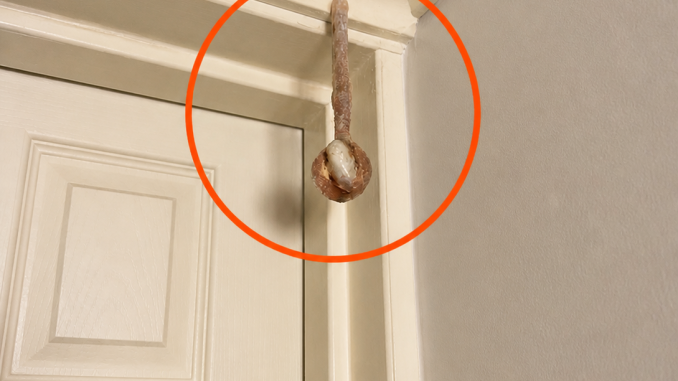
I was sitting on the bed, scrolling through photos, when I noticed a tiny irregular shape near the ceiling. At first, it looked like a minor flaw in the wall—something easy to ignore. But when my partner stepped closer to inspect it, his expression changed from curiosity to unease. He called me over, and together we stood there, trying to make sense of what we were seeing.
It wasn’t just a stain or damage—it had structure. It looked intentional.
Soon, we realized it was a mud dauber wasp nest—small, carefully built from layers of dried mud, almost blending into the wall. From afar, it was invisible. Up close, it revealed a surprisingly intricate design.
The discovery brought a strange feeling—not fear exactly, but discomfort. We had been staying in that room for days, completely unaware of what was just above us. It was a reminder of how easily hidden parts of nature can exist, even in places designed to feel controlled and perfect.
As we looked closer, we learned more. Mud dauber wasps are solitary and usually harmless. They build these nests to store paralyzed spiders as food for their larvae—a natural process, but one that felt unsettling considering how close it had been to us.
After that moment, the room didn’t feel quite the same. It still looked clean and peaceful, but something had shifted in how we saw it. The walls no longer felt like a complete barrier from the outside world. Instead, they felt like a thin line between comfort and nature.
We decided to inform the hotel staff. They responded quickly and professionally. A maintenance worker arrived, clearly familiar with this kind of situation. He carefully removed the nest without making a mess, restoring the wall almost instantly.
Visually, everything went back to normal—but for us, the experience lingered.
For the rest of the trip, we became more aware of small details around us. The corners, the quiet spaces, the unnoticed parts of the room—all seemed more significant. The experience didn’t ruin our vacation, but it changed the way we looked at it.
In the end, what started as a small, unsettling discovery turned into a quiet lesson. Even in places built for comfort and control, nature continues to exist in its own way—often unnoticed, but always present.
And when we finally left, we didn’t just take home memories of the ocean and relaxation—we carried a deeper awareness of the hidden world that exists all around us, even in the most unexpected places.