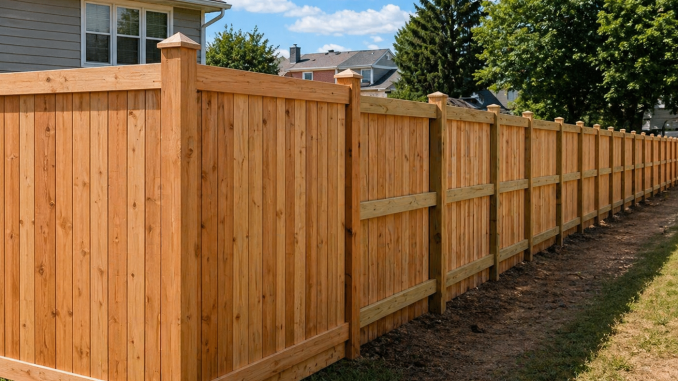
When I decided to install a fence in my backyard, I assumed it would be simple—choose a design, hire someone, and enjoy the privacy. But almost right away, I kept hearing the same advice everywhere:
“Make sure the finished side faces your neighbor.”
At first, it sounded like a strict rule. Something you just follow without question. But the more I looked into it, the more I realized it’s not that simple. What started as a basic home project quickly turned into a lesson about property rules, etiquette, and a few things I wish I had known sooner.
The “finished” side of a fence is the clean, polished side—the one without visible rails or posts. The other side shows the structure holding it together. In most traditional wooden fences, one side looks neat, while the other reveals the framework.
That’s where confusion begins.
If the nicer side faces your yard, your neighbor is left looking at the less attractive side every day. And in close neighborhoods, that can easily create tension.
I assumed there must be a law about this. But after checking local building codes, I found something surprising.
In most places, there’s no universal law requiring the finished side to face your neighbor. It’s more of a long-standing social norm. Traditionally, homeowners placed the better-looking side outward as a sign of respect and courtesy. Over time, that practice started to feel like a rule.
That said, there are exceptions. Some cities or homeowners’ associations (HOAs) do have specific requirements—especially if the fence faces a street or public area. In those cases, the finished side usually has to face outward for visual consistency.
Another key factor is ownership.
If the fence is built fully inside your property line, you typically have full control over how it’s installed. But if it sits directly on the boundary between two properties, things can get more complicated. Shared fences often mean shared decisions—and sometimes shared costs—so communication becomes very important.
I also discovered that there are valid reasons to do things differently.
Some people choose a “good neighbor fence,” which looks the same on both sides and avoids the issue completely. Others place the structural side inward for added security, making it harder to climb from the outside. Things like terrain, budget, existing structures, and even sunlight can also influence the design.
Looking back, I realized that the advice I kept hearing wasn’t really about rules—it was about consideration.
Before moving forward, I took a few simple steps. I checked local regulations, confirmed my property boundaries, and most importantly, had a conversation with my neighbor. That one conversation made everything easier. We agreed on a solution that worked for both of us and avoided any future problems.
In the end, I learned that fences don’t just define space—they affect relationships too.
So, does the finished side have to face your neighbor? Not always. Sometimes it’s required, sometimes it’s recommended, and sometimes it simply comes down to what works best for your situation.
But when in doubt, a little research—and a simple conversation—can make all the difference.