First, an apology — yes, I’ve changed the name of this blog again.
I’ve decided to write elsewhere about child estrangement, which means this space can finally become what I think it was always meant to be: a place to talk about aging. Not in a clinical or distant way, but honestly, personally, and maybe even a little humorously.
Because aging is something that belongs to all of us.
It just becomes louder — harder to ignore — after fifty.
Which, incidentally, is exactly where I find myself now.
Fifty.
An age that doesn’t quite feel old… but definitely isn’t young either.
“Almost old,” perhaps.
That phrase has been sitting with me for a while.
And then, last month, my mother turned 100.
Yes — one hundred.
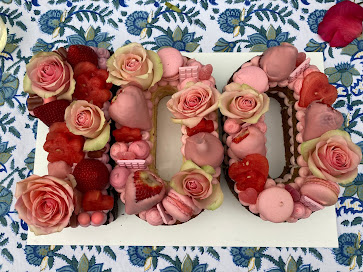
There were cakes. Plural. Because at that point, one cake feels insufficient for the occasion. There were candles, laughter, and the kind of disbelief that spreads across people’s faces when they hear a number like that. Their mouths quite literally fall open.
I’ve learned to quickly add an explanation:
“She had her children late — all three of us in her forties.”
I’m the middle one, of course. That feels somehow fitting.
Still, no explanation quite softens the impact of that number.
One hundred.
People always say, “You’re only as old as you feel.”
But I’ll tell you something they don’t mention —
When your mother reaches three digits, you suddenly feel older than you are.
It’s like time stretches in both directions at once. You’re still someone’s child… but also standing much closer to the edge of something you can’t quite define.
And then, of course, there’s menopause.
Not exactly a dinner party topic, but impossible to ignore.
Statistically, it’s one of the most vulnerable periods in a woman’s life — something we rarely talk about openly. There’s this assumption that vulnerability belongs to youth, to teenagers navigating identity and uncertainty.
But that’s not entirely true.
At least they have youth to fall back on.
The world is built around youth. It celebrates it, protects it, markets to it. You don’t fully realize that until you start to drift out of that category yourself — slowly, quietly, almost without noticing.
Then one day, you do notice.
Menopause doesn’t arrive politely either.
It doesn’t ease its way in.
It’s disruptive. Erratic. Intense.
The body resists the transition as if it’s arguing with itself — as if something inside you is unwilling to let go of what once defined it. The rhythms you’ve known for decades suddenly become unpredictable, almost defiant.
It goes down with a fight.
Why?
No one seems to have a satisfying answer.
Perhaps it’s nature’s blunt way of saying:
“That chapter is over.”
And yet… that’s not the whole story.
Because alongside all of this — the discomfort, the confusion, the quiet grief of change — I’ve started to notice something else.
Something unexpected.
An edge.
Not a decline, not a fading… but an edge.
A sharper awareness.
A different kind of confidence.
A strange freedom in no longer needing to perform youth for the world.
It’s not something I fully understand yet.
But I’m curious about it.
Curious enough, in fact, that I’ve started shaping the idea into something else entirely — a stand-up concept I might call “Almost Old.”
Because maybe this stage of life isn’t just something to endure.
Maybe it’s something to explore… and even laugh about.
I’m not sure yet how the idea will land.
Give me a week or so — I’ll let you know.