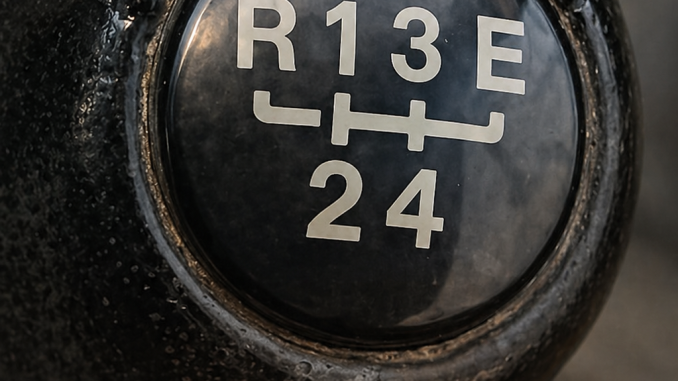
For many years, car gear sticks have been easy to understand. In manual cars, drivers shift through numbered gears, while automatic vehicles use familiar letters like P (Park), N (Neutral), D (Drive), and R (Reverse).
But in some older cars—and even a few modern ones—there’s another letter that often confuses people: “E.”
So what does it actually mean?
A Closer Look at the Mysterious “E”
If you’ve ever noticed the letter “E” next to the usual gear options, you’re not alone in wondering about it. For many drivers, especially younger ones, it can seem like a strange or outdated feature.
However, the “E” was never random—it had a very practical purpose.
“E” Stands for Economy
In older automatic cars, the letter “E” stood for “Economy.”
This mode was designed to help drivers save fuel by keeping the engine running at lower revolutions (RPM). Instead of focusing on speed or acceleration, the car would shift gears more smoothly and conservatively.
This made it especially useful for:
- Long highway drives
- Steady cruising
- Reducing fuel consumption
At a time when fuel efficiency was a major concern, this feature gave drivers more control over how much gas they used.
Why the “E” Mode Disappeared
As technology improved, cars became much smarter.
Modern vehicles now use advanced computer systems that automatically adjust engine performance based on:
- Speed
- Driving style
- Road conditions
Because of this, there’s no longer a need for a manual “Economy” setting. The car handles everything in the background, balancing power and efficiency on its own.
That’s why, over time, the “E” mode slowly disappeared from most vehicles.
The Return of “E” in Electric Cars
Interestingly, the letter “E” has made a comeback—but with a slightly different meaning.
In many modern electric vehicles, “E” often refers to “Electric” or an eco-friendly driving mode.
When activated, this mode:
- Reduces power output
- Improves energy efficiency
- Extends battery range
It’s similar in idea to the old Economy mode, but now it’s focused on saving battery instead of fuel.
A Symbol of a Changing Industry
Today, the “E” represents more than just efficiency—it reflects the shift toward cleaner and more sustainable driving.
In older cars, it helped save fuel.
In modern vehicles, especially electric ones, it helps conserve energy and reduce environmental impact.
Then vs. Now
- Past: “E” = Economy (fuel-saving mode)
- Present: “E” = Electric / Eco mode (energy-saving driving)
Final Thoughts
The “E” on a gear stick may seem like a small detail, but it tells a bigger story about how cars have evolved.
What started as a simple fuel-saving feature has transformed into a symbol of innovation and sustainability. Whether in older vehicles or today’s electric cars, the meaning behind “E” continues to reflect the way driving technology keeps moving forward.