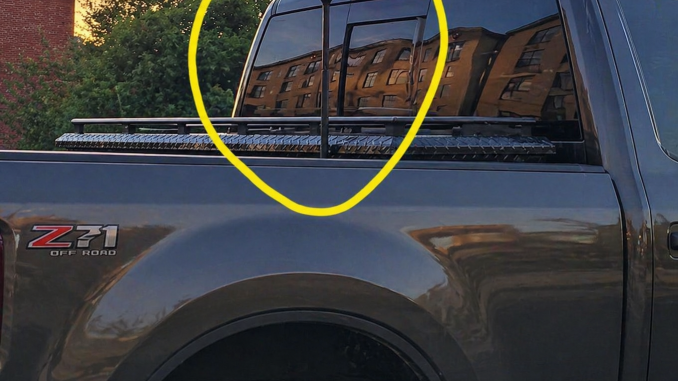
If you’ve ever passed by a pickup truck—especially one heading into rural or off-road areas—you may have noticed a tall, thin rod rising behind the cab. At first glance, it might look like a random add-on or a strange design choice. But in reality, that “pole” serves an important purpose and is becoming increasingly common among drivers who rely on strong connectivity in remote places.
That rod is actually part of a mobile phone signal booster system—a practical solution for anyone who depends on their phone for communication, navigation, or emergencies while traveling far from city coverage.
What Exactly Is That Rod?
The pole you see isn’t just for looks—it’s an external antenna connected to a cell signal booster. These systems are specially designed for vehicles like trucks and SUVs to improve signal strength in areas where reception is weak or nonexistent.
Here’s how it works: the external antenna captures faint signals from distant cell towers. That signal is then sent to an amplifier inside the vehicle, which strengthens it. Finally, an internal antenna redistributes the boosted signal throughout the cabin, giving you better call quality, faster data, and more reliable service—even in the middle of nowhere.
Why Are They Becoming So Common?
In today’s world, staying connected isn’t just convenient—it’s essential. Anyone who spends time in remote regions knows how frustrating it is to lose signal completely.
For truck drivers, farmers, contractors, and outdoor enthusiasts, having a dependable connection can be critical. Phones are used not only for calls but also for GPS navigation, work coordination, and emergency situations. Imagine being stranded miles away from help without any signal—that’s exactly the problem these boosters solve.
That’s why more drivers are turning to signal boosters. They don’t just improve convenience—they add a layer of safety.
How Do Signal Boosters Work?
A typical system includes three main parts:
- External Antenna: Mounted outside the vehicle (often behind the cab), it captures weak signals from nearby towers.
- Amplifier: Located inside the truck, it strengthens the captured signal.
- Internal Antenna: Re-broadcasts the improved signal inside the cabin, allowing phones to connect more effectively.
Many modern systems can support multiple devices at once, making them ideal for teams, families, or group travel.
A Modern Take on an Old Idea
Interestingly, these boosters are somewhat of a modern replacement for CB radios. Years ago, truckers relied heavily on CB radios to communicate on the road—sharing updates, warnings, and even casual conversation.
While CB radios still exist, smartphones have taken over most communication needs. Signal boosters simply ensure those phones work reliably—even in places where coverage is usually poor.
Are They Worth It?
For people who frequently travel through remote areas, a signal booster can be a smart investment. While they typically cost between $300 and $500, the benefits often outweigh the price.
Reliable signal access can improve productivity, reduce stress, and—most importantly—enhance safety. In emergencies, being able to make a call or access GPS can make a huge difference.
More Than Just Trucks
Although commonly used on pickup trucks, signal boosters are helpful in many situations:
- Camping trips: Stay connected for navigation or emergencies
- Long road trips: Maintain access to maps, music, and communication
- Construction sites: Keep teams connected in areas with poor coverage
Final Thoughts
That unusual pole on the back of a pickup truck isn’t just a random accessory—it’s a powerful tool designed to keep drivers connected when it matters most. Whether for work, travel, or safety, these signal boosters play an important role in modern driving.
As technology continues to evolve, tools like these ensure that even in the most remote locations, you’re never completely cut off from the world.