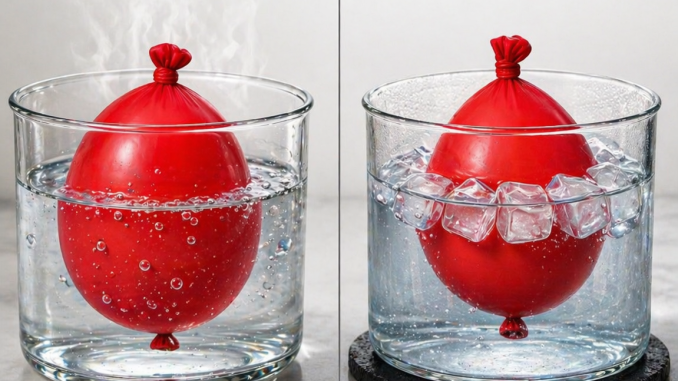
At first glance, this looks like a simple comparison — two identical balloons placed in water. One is sitting in warm water (70°C), and the other is in ice-cold water (1°C). Same size, same setup… so most people assume they will behave the same way.
But this is where it gets interesting.
Inside each balloon is air. And air, like all gases, reacts to temperature changes. When air is heated, the molecules inside start moving faster and spread farther apart. This creates more pressure inside the balloon, pushing outward on the rubber and making it expand.
Now imagine Balloon A sitting in warm water. The heat transfers through the balloon and warms the air inside. As the temperature rises, the air expands more and more. The balloon stretches, the pressure increases… and eventually, it reaches its limit.
On the other hand, Balloon B is in very cold water. The cold temperature slows down the air molecules inside. Instead of expanding, the air actually contracts slightly. The pressure inside decreases, and the balloon becomes tighter and less likely to expand.
So while both balloons may look identical at the start, they are actually going through completely different physical changes.
Many people think cold makes things “harder” and more likely to pop — but in this case, it actually does the opposite. Cold reduces pressure, while heat builds it up.
That’s why this question tricks so many people.
They focus on the outside… instead of what’s happening inside.
👇
👇
👇
Final Answer: Balloon A (Warm Water – 70°C) will blow up first.