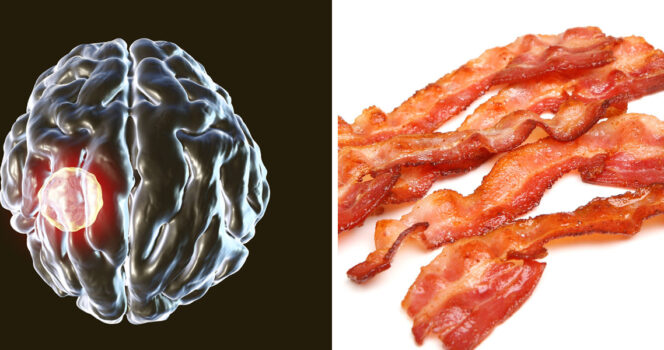
Bacon is a popular food enjoyed by millions of people around the world. An anonymous 52-year-old patient was also a fan, but his preference for a particular way of eating it may have contributed to a serious health problem.
For several weeks, the man had been experiencing excruciating migraine headaches along with severe pain in his back. Doctors performed multiple tests to determine what was causing his symptoms, eventually discovering unusual “cyst-like lesions” in his brain. Further examination revealed that the cysts contained tapeworm larvae.
The condition was linked to Taenia solium, a tapeworm commonly associated with pigs. Its larvae can cause cysticercosis when they enter human tissue, including the brain.
The man spent several weeks in intensive care after the larvae had formed cysts in his brain. Doctors treated him with antiparasitic medication, along with anti-inflammatory drugs to help reduce the swelling and inflammation caused by the infection.
Medical professionals eventually identified a possible source after learning about the man’s breakfast habits.
He had a lifelong preference for “soft” bacon and regularly ate it lightly cooked, rather than crispy. Doctors considered his habit of eating undercooked pork a potential risk factor for the infection. Food-safety guidance recommends cooking pork to a safe internal temperature to reduce the risk of foodborne illness.
Because bacon is thin, judging its internal temperature can be difficult. However, it can also cook relatively quickly. The patient’s case report noted that undercooked pork consumption was considered a theoretical risk factor.
The report also emphasized that infected pork is historically very uncommon in the United States, making the case particularly unusual and potentially relevant from a public-health perspective.
What do you think about this unusual case? Let us know in the comments on Facebook.