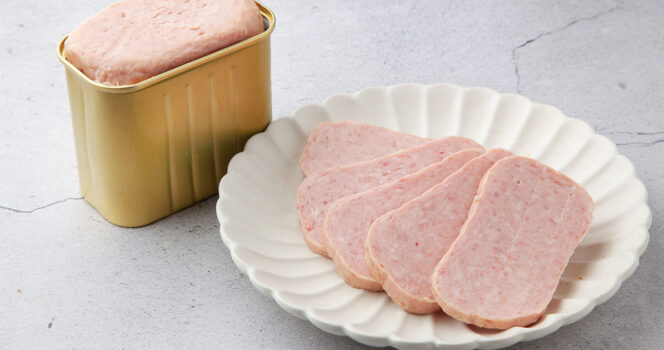
Among the classic foods you might have discovered sitting in the back of your grandparents’ pantry, SPAM is probably one of the most recognizable.
A canned meat product that has been around for generations, SPAM has always been a food that divides opinions. Some people love it, while others are fascinated by the mystery surrounding what’s actually inside that small blue can. Surprisingly, the curiosity around SPAM may have helped make it even more famous than any marketing campaign could.
So, what exactly is SPAM? Where did it come from? And what ingredients are packed into that famous can? Here’s what we found.
What is SPAM?
SPAM was introduced in 1937 by Hormel Foods Corporation, an American food company. It became especially popular before and during World War II, when food shortages and rationing made affordable, long-lasting meat products extremely valuable.
One of the biggest mysteries surrounding SPAM is what the name actually means. There has never been a confirmed official explanation, which has only added to the legend.
Some people claim SPAM stands for “Specially Processed American Meat,” while others suggest “Shoulder of Pork and Ham.” Other unofficial explanations have appeared over the years, including phrases like “Spiced Ham” and even humorous alternatives.
One popular story says that Ken Daigneau, the brother of a Hormel executive, created the name during a company naming contest by combining the words “spiced” and “ham.” He reportedly won a $100 prize for the idea.
What ingredients are in SPAM?
Despite all the rumors, the ingredients are actually pretty simple. Traditional SPAM is made with:
- Pork and ham
- Water
- Salt
- Potato starch
- Sugar
- Sodium nitrate
That’s it — no secret mystery meat hidden inside.
How is SPAM made?
The production process is also surprisingly straightforward. Ground pork and ham are mixed together with the other ingredients until combined. The mixture is then placed into cans, vacuum-sealed, cooked, cooled, and labeled.
SPAM became a major food during difficult times because it was inexpensive, convenient, and had a long shelf life. Decades later, it remains a popular product around the world.
Did you already know what SPAM was made from, or did you think there was some secret ingredient inside?