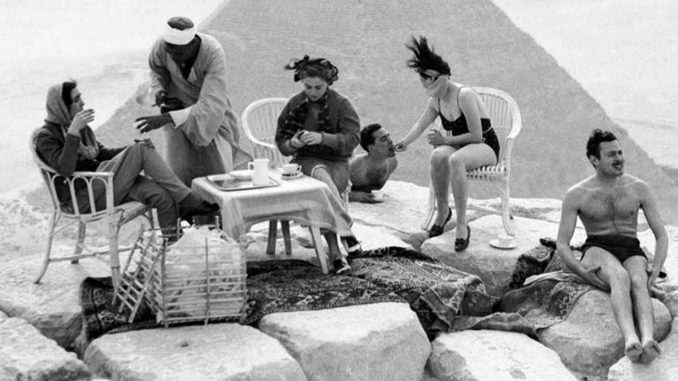
Technology and life change quickly, making it challenging to grasp what the world was like 50 or 100 years ago. People often learn about history through textbooks, museums, and documentaries. However, a lot goes unnoticed, especially regarding the daily lives of ordinary people back then. For instance, what did a gas pump look like in the 1930s? How did students apply to universities in the 1920s? Were toasters used the same way as today? Fortunately, some remarkable photographs exist that provide answers to these questions. These images have been preserved and digitized for future generations to explore the past. According to Bored Panda, they have searched the internet to find some of the most rare and captivating examples. Readers are invited to look through them and experience a lifestyle from a different time.
Life before the internet, social media, and mobile devices was quite different. The pace of life was slower, workweeks were longer, and many chores were more laborious. For those who think their work is tough now, it is worth considering the lives of people from earlier generations. The concept of a weekend was not always present. The weekend, as noted by the site We Invented The Weekend, was first introduced in Greater Manchester in 1843 by Robert Lowes, a director and workers’ rights advocate, who fought for workers’ rights to have leisure time on Saturday afternoons.
The first significant break from the workweek in Britain was Saturday afternoons off. In 1908, an American cotton mill began the first five-day work week to allow Jewish employees to observe their Sabbath from Friday evening to Saturday evening. Henry Ford adopted this model in 1926, giving his workers weekends off and advocating for a 40-hour work week. The BBC mentioned that this decision was partly altruistic, allowing workers to use their free time to purchase consumer goods, thereby stimulating the economy. The five-day work week became official in the United States in 1932.
Child labor is illegal in many places today, but this was not always true. Many rural American children worked on their family farms, while city children often labored in mines and factories. Some sold newspapers or food, and others shined shoes to help support their families.
Concerns about child labor grew within the Progressive movement, a group that sought government intervention to address social and economic issues. The Library of Congress reported that this movement included people who believed that government should play an active role in solving these problems.
What other historical photos might reveal about daily life in the past?
Sources:
Source: Bored Panda, by Eligijus Sinkunas