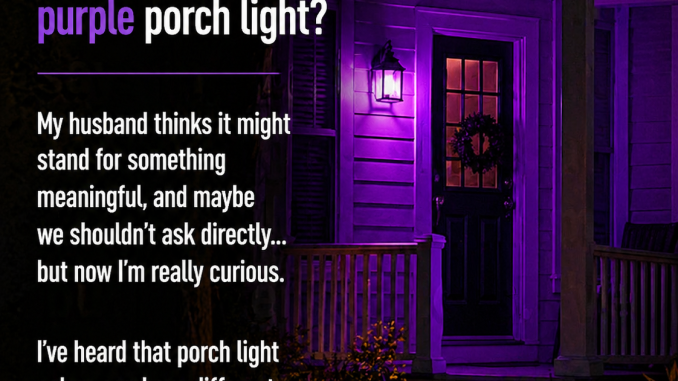
Across quiet neighborhoods, calm streets, and small towns, porch lights usually fade into the background. Most homes use a simple white bulb or a warm yellow glow to light up their entryways. But every now and then, one house stands out. Instead of the usual color, its porch shines with a soft purple light.
At first, it might seem like a decorative choice. Maybe the homeowner likes the color, or perhaps the bulb was changed during a holiday and never switched back. But in many cases, that purple glow carries a much deeper meaning.
For many households, a purple porch light is part of a growing effort to raise awareness about domestic violence and to show support for survivors. It’s a small, quiet gesture that doesn’t demand attention, yet it communicates a powerful message—one that many people may not immediately recognize.
Understanding the meaning behind that purple light helps communities become more aware, compassionate, and supportive toward those who may be struggling behind closed doors.
A Small Light With a Bigger Purpose
Porch lights have always served a practical role—lighting pathways, helping guests find the door, and creating a sense of safety at night. Over time, however, they’ve also become a subtle way for people to express support for important causes.
Because they are visible from the street, porch lights act as quiet signals seen by neighbors and passersby. Simply changing the color allows homeowners to take part in awareness campaigns without using signs or banners.
Different colors have been used to represent various causes—some related to health, others to social issues. Purple, in particular, has become widely associated with domestic violence awareness.
Understanding Domestic Violence
Domestic violence is a serious issue that affects millions of people worldwide. Despite increased awareness, many cases remain hidden due to fear, stigma, or lack of support.
It involves patterns of behavior used to control or harm someone within a relationship or household. This can include:
- Physical abuse – such as hitting, pushing, or causing bodily harm
- Emotional abuse – including insults, humiliation, and manipulation
- Psychological abuse – like intimidation, isolation, or controlling behavior
- Financial abuse – restricting access to money or employment
- Sexual abuse – any unwanted or forced sexual activity
Even when physical signs aren’t visible, the emotional and psychological effects can last for years.
Why It Often Goes Unnoticed
One of the most challenging aspects of domestic violence is that it often happens behind closed doors. Neighbors might not hear anything unusual, and even close friends or family may not realize what’s happening.
Many survivors stay silent due to fear—fear of retaliation, losing stability, or facing judgment. In some cases, the person causing harm isolates them from others, making it even harder to seek help.
Because of this, awareness efforts—like the purple porch light—play an important role in bringing attention to an issue that often remains hidden.
The Meaning of the Color Purple
Colors carry meaning, and purple has long symbolized strength, dignity, and courage.
In the context of domestic violence awareness, purple represents:
- Resilience – recognizing the strength of survivors
- Respect – honoring their experiences
- Hope – reminding communities that change is possible
These meanings have made purple the defining color of awareness campaigns related to this issue.
How the Movement Began
The idea of using purple porch lights started as a simple way to make domestic violence awareness more visible. Communities and organizations encouraged people to replace their regular bulbs with purple ones during awareness periods.
The goal was to create a visual reminder throughout neighborhoods—a quiet but noticeable signal that sparks curiosity and conversation.
When multiple homes participate, entire streets can take on a soft purple glow. That change often leads people to ask questions, opening the door to important discussions.
What the Purple Light Represents
A purple porch light sends a message, even without words. It often stands for:
- “You are not alone.”
- “We support survivors.”
- “We care about this issue.”
- “Everyone deserves to feel safe at home.”
While the light itself doesn’t solve the problem, it helps create an environment where people feel more comfortable talking about it.
Why Awareness Matters
Raising awareness is a key step in addressing domestic violence.
It helps people understand how common the issue is, recognize warning signs, and learn where to find help. Signs might include sudden withdrawal, visible injuries, anxiety, or unexplained behavioral changes.
Awareness also connects people to resources like shelters, counseling services, and support lines—resources that can make a life-changing difference.
The Power of Community Support
One of the hardest parts for survivors is feeling isolated. When people believe they are alone, it becomes much harder to seek help.
Community actions—even small ones—can reduce that sense of isolation. Seeing signs of support, like purple porch lights, can remind someone that help and understanding exist.
Support can come in many forms:
- Listening without judgment
- Offering emotional encouragement
- Helping someone find professional support
- Providing a safe and supportive environment
Every act of support contributes to rebuilding lives.
Education and Prevention
Another key goal of this movement is education. Many people don’t fully understand what domestic violence looks like or how it develops.
Learning about healthy relationships, boundaries, and respectful communication can help prevent abuse in the future.
Schools, workplaces, and communities often hold awareness events and discussions to spread this knowledge and encourage open conversations.
Beyond Symbolism
While a purple porch light is meaningful, true support goes beyond symbols.
Helping survivors involves action—offering understanding, guiding them toward resources, and respecting their choices. Every situation is different, and support should always be offered with care and patience.
Professional organizations play a crucial role by providing:
- Emergency shelter
- Counseling and therapy
- Legal support
- Safety planning
- Support groups
These services help individuals navigate difficult situations and begin rebuilding their lives.
Small Actions, Big Impact
It’s easy to underestimate the power of small gestures. Changing a light bulb may seem insignificant, but it can start conversations, raise awareness, and inspire others to take action.
Over time, these small steps create larger changes—helping communities become more informed, supportive, and proactive.
A Symbol That Continues to Grow
The purple porch light has become a recognized symbol in many communities. As more people learn its meaning, its impact grows stronger.
What began as a simple idea has evolved into a visible sign of compassion, awareness, and solidarity.
What It Means When You See One
The next time you notice a purple porch light, remember—it may represent more than just a color choice.
It could be a quiet sign of support for survivors. A reminder that someone cares. A message that no one should feel unsafe in their own home.
That soft purple glow may be subtle, but its meaning is powerful—standing for hope, strength, and the belief that every person deserves safety and respect.