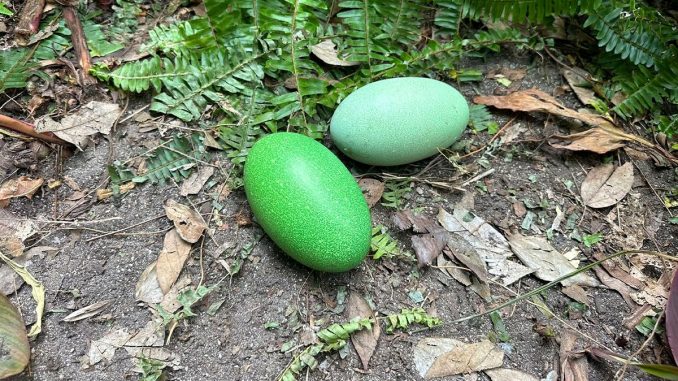
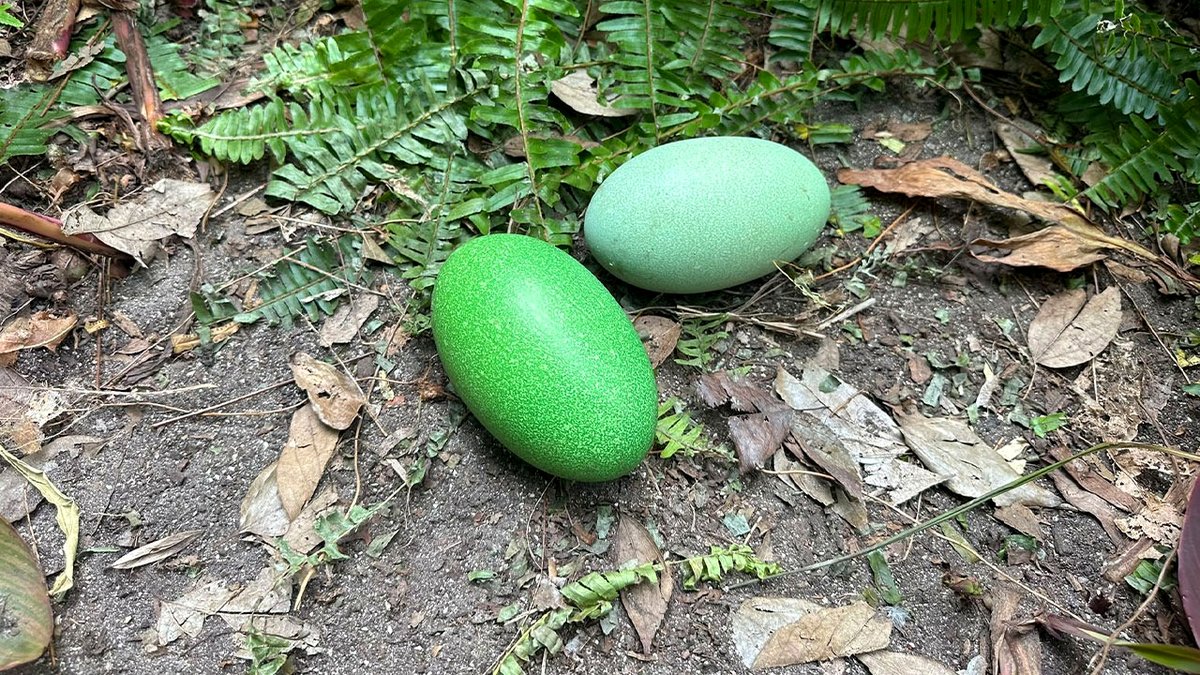
Adelaide Zoo in Australia is celebrating a significant event. For the first time in 34 years, Southern Cassowaries at the zoo have laid eggs, which is notable because breeding these birds in captivity is challenging. These eggs are not just ordinary; they have a striking green color that resembles something from a fantasy tale. The soon-to-be parents are Martina, a 10-year-old cassowary, and Jeffrey, who is 13. The two were brought together earlier this year.
The zoo initially shared news about the first egg but later confirmed to Bored Panda that they have now laid three eggs. It is still unclear if any of these eggs are fertile, but their existence marks a significant success. The process of pairing Martina and Jeffrey was complex. Southern Cassowaries are usually solitary and can be aggressive, especially outside of breeding times. Zoo staff observed their interactions carefully, looking for signs like soft calls and sharing food.
Once introduced in August, Jeffrey approached Martina and started grooming her, which was a promising sign. They even mated on their first day together, and staff have seen this behavior multiple times since. This is the first time since 1992 that the zoo’s Southern Cassowaries have produced eggs.
The zoo’s history with cassowaries is noteworthy. The first chick hatched there in 1968, followed by six more in 1992. There had been no recorded eggs since then. The cassowary eggs are unique. Unlike the common white or brown eggs, these eggs are vibrant green, colored by a pigment called biliverdin, which helps them blend into the rainforest environment.
Southern Cassowaries (Casuarius casuarius) are large, flightless birds found in the tropical forests of northeastern Australia, New Guinea, and some parts of Indonesia. They have shiny black feathers and bright blue heads with red wattles and helmet-like casques, giving them a striking appearance. Despite their look, they are generally shy and prefer solitude, communicating through low-frequency calls that can be difficult for humans to hear. If they feel threatened, they can be defensive and are equipped with strong legs and sharp claws for protection.
Their diet largely consists of fallen fruit, but they also consume insects, small animals, and whatever else is available.
What do you think about the rare occurrence of cassowaries laying eggs at the zoo?
Sources:
Source: Bored Panda, by Tarik Velić