Underwater, a healthy reef is full of sounds. A few years back, scientists found that these sounds might help repair damaged reefs. In 2019, an international group of researchers aimed to attract young fish to a harmed area of Australia’s Great Barrier Reef using a method they called “acoustic enrichment.” This team included experts from the University of Exeter and the University of Bristol in the U.K., alongside researchers from Australia’s James Cook University and the Australian Institute of Marine Science.
They believed that adding more sounds could lead to more fish, which might help bring life back to the reef. Tim Gordon, the lead author from the University of Exeter, noted that increasing fish numbers this way could support natural recovery processes, helping to address damage seen on coral reefs worldwide. Steve Simpson, the senior author also from the University of Exeter, pointed out that healthy coral reefs are very noisy, filled with the sounds of snapping shrimp and various fish. Young fish use these sounds to find places to settle.
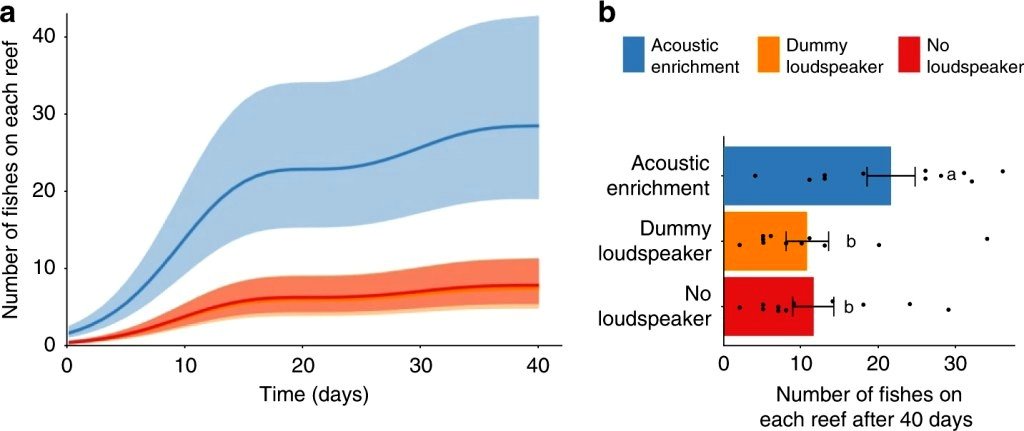
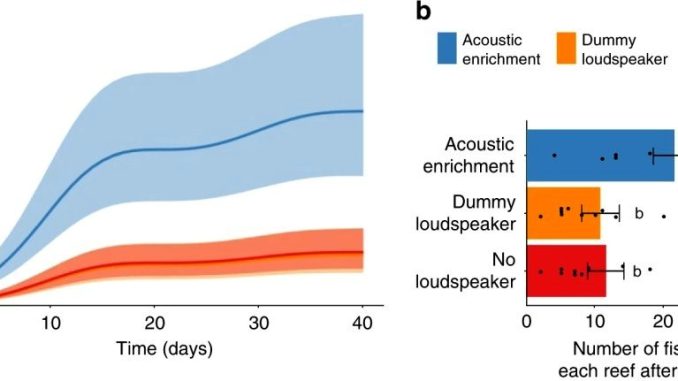
The team conducted an experiment over six weeks by placing underwater speakers in areas of dead coral that played recordings of healthy reefs. They discovered that these areas attracted twice as many fish that stayed compared to similar areas without sound. Additionally, biodiversity increased by 50%. This part was especially hopeful since different fish species have unique roles in the reef ecosystem. For example, some fish help control algae, while others keep fish populations balanced. A healthy reef is a mix of many creatures working together, creating a lively environment. Bringing back more types of fish could help restore the ecological balance in the reef.
The experiment’s positive results led the researchers to think that using sound, along with habitat restoration and other conservation approaches, could speed up the recovery of the ecosystem.
Now, scientists in Jamaica are exploring a similar concept. In 2026, a project off Jamaica’s northern coast is using “underwater boomboxes” to play recordings of healthy reefs. This initiative combines art and science, featuring sculptures created by Italian artist Marco Barotti, which serve as mounts for solar-powered speakers. They also attached lab-grown coral fragments to these sculptures.
This method is still in the early stages. Sound alone cannot fix the damage caused by climate change, pollution, and other human activities. However, by mimicking the sounds of a vibrant reef, there may be a chance to attract life back to these areas. Small efforts like this can enhance restoration projects. What are your thoughts on using sound to help revive coral reefs?
Sources:
Source: Upworthy, by Heather Wake