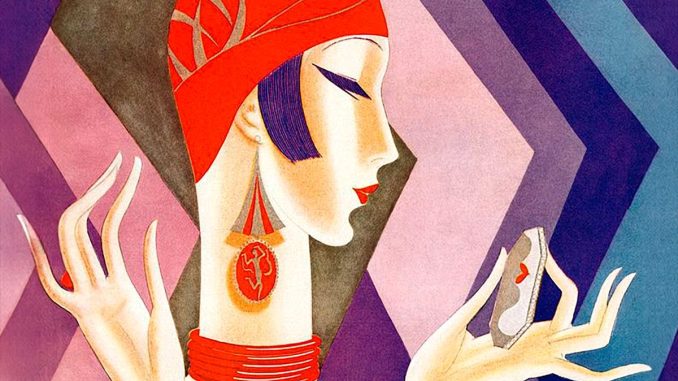
Vogue originally showcased its fashion vision through illustrations before the rise of supermodels and photography. The magazine’s first edition, released on December 17, 1892, featured a black-and-white illustration by A. B. Wenzel depicting a debutante. In the following decades, artists, rather than photographers, determined the magazine’s visual style. A Facebook art community called Enigma Elysium has collected several notable illustrated covers from Vogue, highlighting imaginative scenes like women on peacocks and surreal designs by Salvador Dalí. This collection exemplifies the creativity in fashion publishing prior to photography’s dominance.
One striking cover is from January 15, 1922, known as the “Motor And Southern Number,” attributed to Helen Dryden. It shows an elegant woman in a white gown walking under pink palm trees with a parasol, accompanied by a greyhound. Dryden, recognized as the highest-paid female commercial artist in the U.S. during her time, helped blend Art Nouveau and Art Deco styles. After Condé Nast acquired Vogue in 1909, the focus shifted more towards women and fashion, transforming covers into artistic pieces. Artists such as Dryden, Georges Lepape, George Wolfe Plank, and Eduardo García Benito created vibrant illustrations featuring elongated figures and bold colors in fantastical settings.
In 1932, Vogue marked a significant change with its first color photographic cover, created by Edward Steichen, which featured a swimmer holding a beach ball. Although illustrations did not vanish immediately, the trend shifted toward photography by the late 1950s.
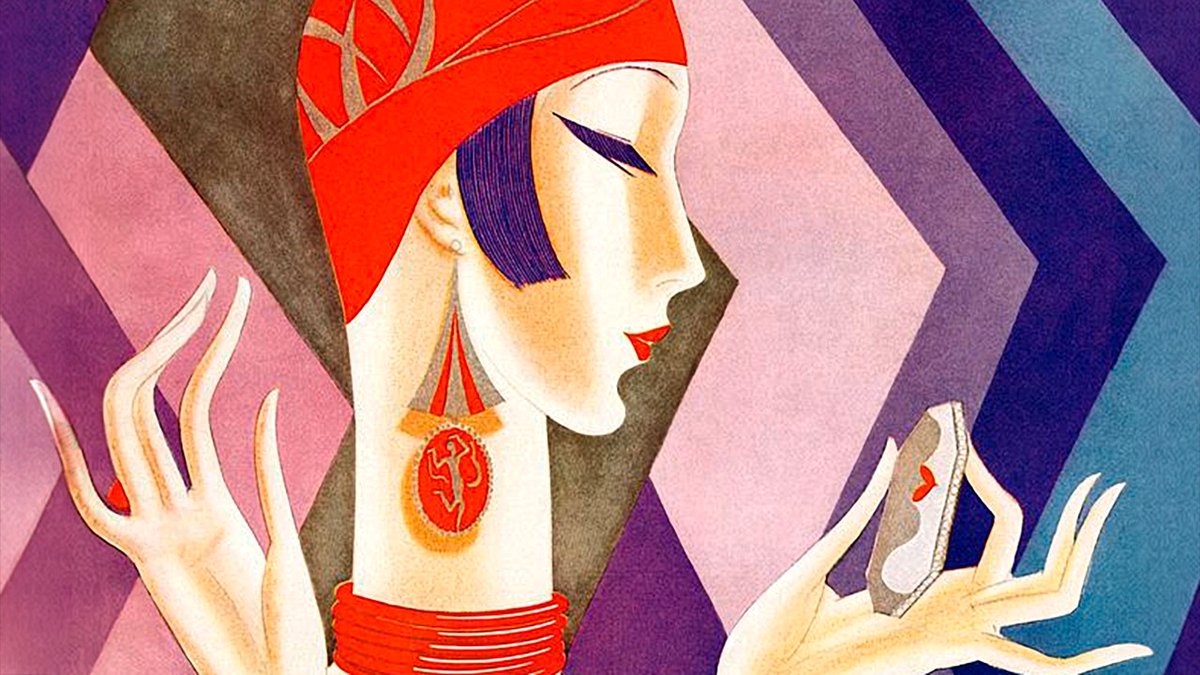
Another notable cover is from July 15, 1926, created by Eduardo García Benito. This piece reflects the Roaring Twenties, depicting a stylish woman in a red cloche hat and a sharp bob against a zigzag background.
In the May–June 1947 issue of Vogue Paris, Italian costume designer Giulio Coltellacci illustrated Paris as a fashionable woman. The cover featured her in an Eiffel Tower bodice, resting on the Arc de Triomphe while the magazine’s name appeared in feathers. This issue was released shortly after Christian Dior introduced his iconic New Look, signaling Paris’s resurgence as a fashion hub.
Illustrated covers are now considered valuable among collectors. Vogue occasionally revisits this tradition with modern artists, such as Andy Warhol’s pop-art portrayal of Princess Caroline of Monaco for Vogue Paris in 1983 and David Hockney’s painted cover two years later, as well as hand-painted landscapes on British Vogue in 2020.
Another notable cover from April 1, 1918, shows a woman in a black gown adorned with white flowers riding a crowned white peacock. This cover, attributed to George Wolfe Plank, was published during World War I and included a request for readers to attach a one-cent stamp to send the magazine to soldiers.
What do you think about the artistic covers of Vogue’s past?
Sources:
Source: Bored Panda, by Eglė Tenikytė