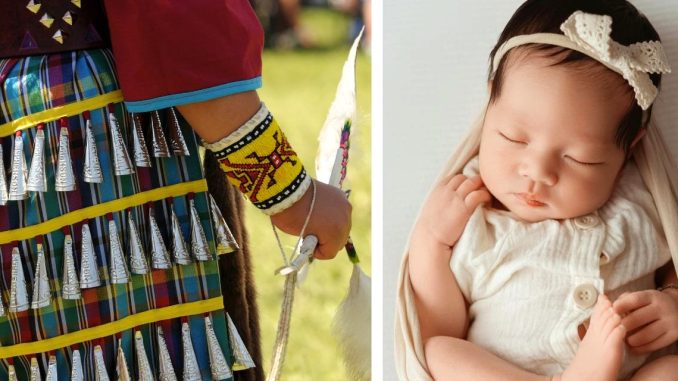
Morgan Opikokew from Saskatchewan was surprised when her video of her four-month-old daughter Margot participating in her first powwow dance became popular online. She hopes that this exposure will motivate other parents to share their Cree culture with their children. The video features Margot in a jingle dress, which is part of a meaningful healing dance tradition among Cree, Ojibwe, and other Indigenous groups in North America. This dance started with the Ojibwe people in the early 1900s, during the 1918 flu pandemic.
The history of the Jingle Dress Dance is rooted in a legend about an Ojibwe medicine man’s granddaughter who became ill. The grandfather dreamt of four women in Jingle Dresses who showed him how to create the dress, select the proper songs, and perform the dance to heal her. After following their instructions, the granddaughter recovered. The dance eventually spread to nearby tribes like the Dakota, Lakota, and Cree, becoming a common feature at powwows today. Some dancers stick to traditional styles, moving gracefully and closely to the ground, while others incorporate modern elements with unique footwork and feather decorations.
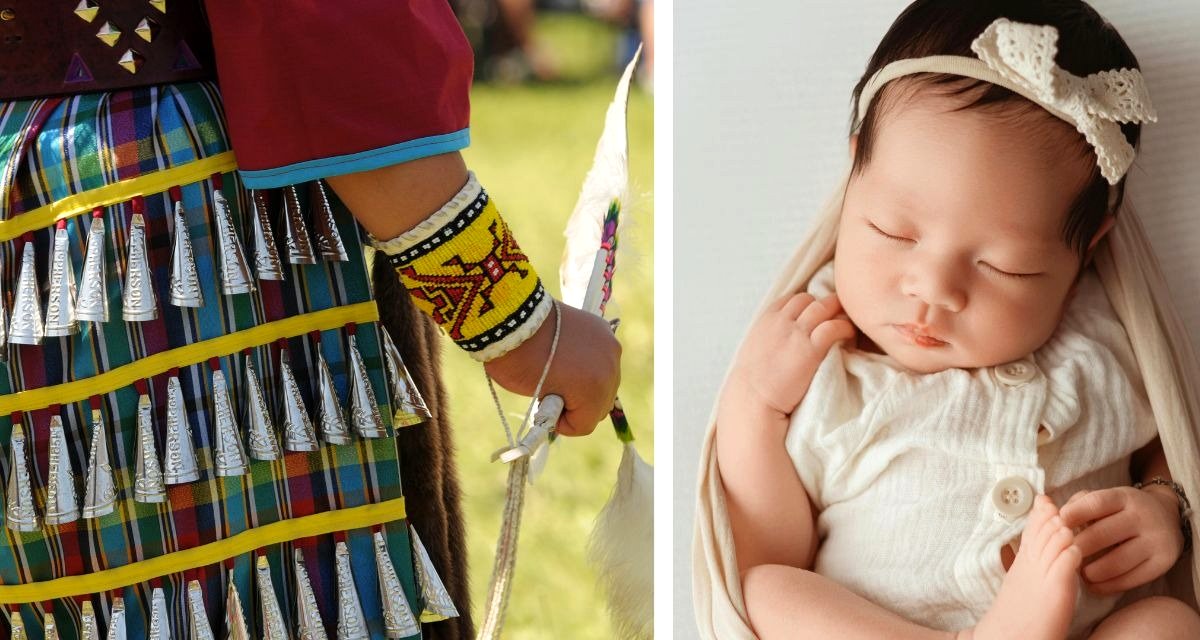
In the video, little Margot wears a bright pink jingle dress, receiving help from a harness since she cannot walk yet. The footage is both charming and emotional. Opikokew captioned the post about her daughter’s first powwow dance, expressing gratitude for the positive reactions and sharing their Cree identity from Treaty 10 territory.
One viewer noted that ancestors were likely celebrating Margot’s life journey, while another praised the beautiful culture displayed. Opikokew’s video quickly gained popularity, reaching 1.5 million views and attracting attention from local news outlets. In a conversation with CTV News, she mentioned that she didn’t experience her first powwow until she was a teenager and was unaware of her Indigenous identity growing up. She hopes to provide her daughter with a different experience, emphasizing the importance of sharing cultural heritage to prevent it from fading away.
What do you think about the significance of sharing cultural traditions with the next generation?
Sources:
Source: Upworthy, by Heather Wake