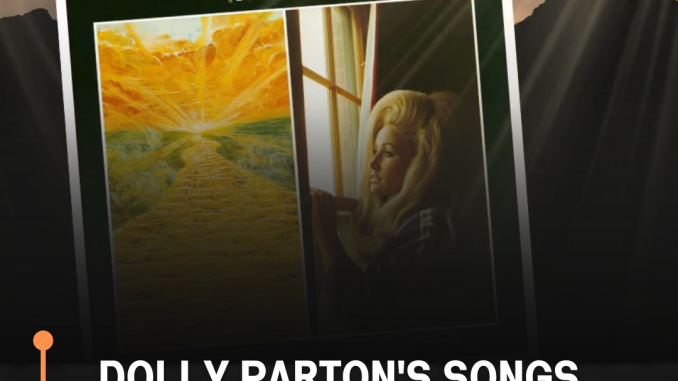
The 1971 Album Beautifully Brings Together Dolly’s Faith, Family, and Musical Roots
More than five decades after its release, Dolly Parton’s The Golden Streets of Glory remains an important and deeply personal chapter in the country legend’s remarkable career.
Released on Feb. 15, 1971, the album marked Dolly’s sixth solo studio album and her 12th album overall when her collaborative recordings with Porter Wagoner are included. More than simply a collection of gospel songs, The Golden Streets of Glory offered listeners a glimpse into Dolly’s faith, family history, and the musical traditions that shaped her from childhood.
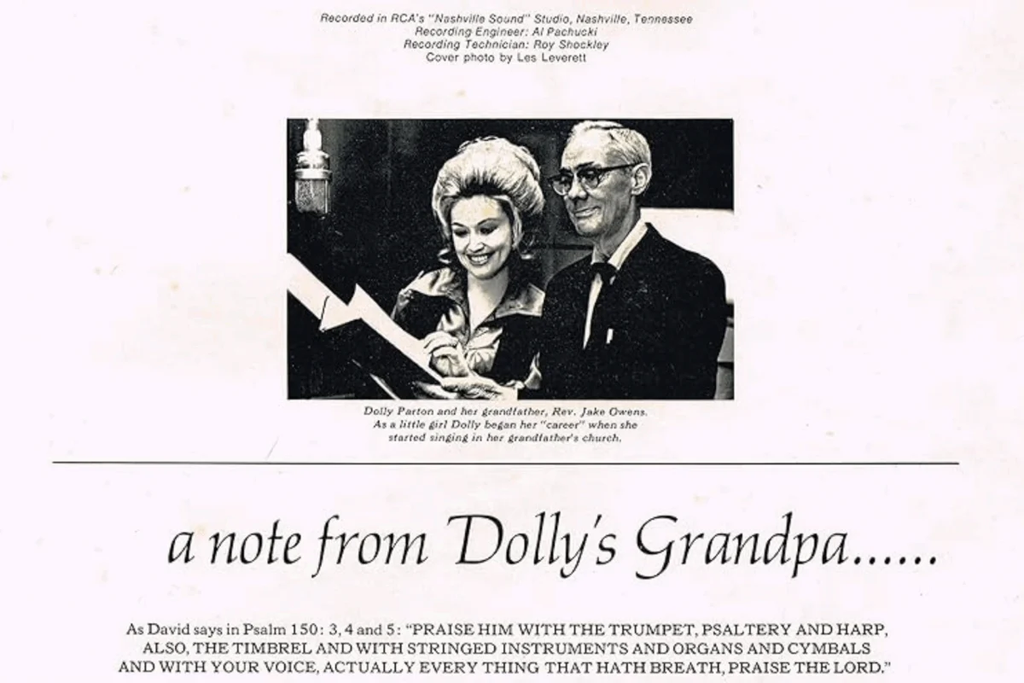
The project also allowed Dolly to honor the spiritual legacy of her maternal grandfather, Rev. Jake Owens, a minister who played an important role in her early life and musical development.
The album includes traditional hymns alongside songs written by Dolly herself and members of her family. One of its standout moments is “How Great Thou Art,” a beloved hymn that Dolly places alongside original material and songs connected to her family.
In the album’s liner notes, Rev. Owens shared a heartfelt message about his granddaughter and her long-held dream of recording a collection of sacred songs.
“I believe that as you listen to the songs in this great sacred album you will need no introduction to the lady who is singing.”
He went on to praise Dolly for putting her “heart and soul” into every song and described the gospel album as a dream that had finally become a reality.
Rev. Owens concluded by saying that Dolly was using her talent to praise God and bless others, adding that she was guided by “The Master’s Hand.”
Later that same year, Dolly would release two more solo albums, Joshua and the now-iconic Coat of Many Colors. Although those projects would go on to receive enormous attention, The Golden Streets of Glory remains a meaningful piece of Dolly’s musical history.
Here’s a closer look at the 10 songs featured on the album.
1. “I Believe”
The album begins with “I Believe,” making it a fitting introduction to a record centered around faith.
Written by Ervin Drake, Jimmy Shirl, Irvin Graham, and Al Stillman, the song was first recorded in 1953 and later became associated with artists including Perry Como and Elvis Presley.
Dolly’s version gives the classic song her own country and gospel-inspired touch while immediately establishing the spiritual tone of the album.
2. “Yes, I See God”
Dolly follows with “Yes, I See God,” a song written by her aunt, Dorothy Jo Hope.
Hope had already contributed to Dolly’s musical history by co-writing “Daddy Was an Old Time Preacher Man,” recorded by Dolly and Porter Wagoner. That song was inspired by Dolly’s grandfather, Rev. Owens.
On The Golden Streets of Glory, “Yes, I See God” begins with a gentle, almost lullaby-like feel before the choir enters and creates a memorable call-and-response arrangement.
3. “The Master’s Hand”
“The Master’s Hand” is one of three songs on the album written by Dolly herself.
The upbeat track uses tambourine-driven rhythm as Dolly draws inspiration from stories in the Old Testament. She references the world before the Great Flood and Noah’s faith in God before moving into the story of Shadrach, Meshach, and Abednego.
The song’s central message is one of trust and perseverance, encouraging listeners to hold onto their faith even when faced with evil and hardship.
4. “Heaven’s Just A Prayer Away”
With a lively country sound and a touch of a more contemporary feel, Dolly takes on Tommy Tomlinson’s “Heaven’s Just A Prayer Away.”
The song gives Dolly an opportunity to showcase the strength and versatility of her voice while continuing the album’s focus on faith and the hope of Heaven.
Its message also connects naturally with other songs on the record, particularly those dealing with salvation and the journey toward eternal life.
5. “The Golden Streets of Glory”
The album’s title track is another original written by Dolly.
The song looks toward Heaven and reflects on the promise of reaching the “golden streets of glory.” Dolly combines traditional sacred influences with a country arrangement featuring prominent guitar work.
There is a warmth and simplicity to the recording that makes it feel especially personal, as though Dolly and the musicians were having genuine fun bringing the song to life.
6. “How Great Thou Art”
Few gospel songs are as recognizable as “How Great Thou Art.”
Originally written by Carl Boberg in 1885 and later translated into English by Stuart K. Hine, the hymn became one of the most enduring pieces in Christian music.
Elvis Presley had also recorded the song on his 1967 gospel album How Great Thou Art, which earned him his first Grammy Award for Best Sacred Performance.
Dolly’s interpretation adds another important country voice to the song’s long history and helps make it one of the album’s defining moments.
7. “I’ll Keep Climbing”
Dolly once again turns to her aunt Dorothy Jo Hope for “I’ll Keep Climbing.”
The song begins quietly, reflecting on the struggles and uncertainty of life before building toward a more energetic chorus.
With clapping and tambourine adding momentum, Dolly repeatedly sings about continuing to climb until Heaven becomes her home. The arrangement gives the song a joyful, uplifting quality.
8. “Book of Life”
“Book of Life” carries an especially strong family connection.
According to the album’s liner notes, Dolly began singing as a young girl in her grandfather’s church. Including a song written by Rev. Jake Owens on her first gospel album therefore felt like a natural way to honor the man who helped shape her early spiritual and musical life.
The song centers on the biblical concept of the Book of Life and asks whether a person’s name is written there.
Its revival-style arrangement gives the recording a powerful evangelical character, while its lyrics focus on faith, salvation, and turning toward Jesus.
9. “Wings of a Dove”
The album was produced by Bob Ferguson, who also contributed as a songwriter.
Dolly records Ferguson’s “Wings of a Dove,” a song originally recorded by Ferlin Husky in 1958.
The song focuses on God’s love and uses the image of a dove as its central spiritual symbol, drawing on the biblical account of Jesus’ baptism by John the Baptist.
Dolly’s interpretation gives the track a gentle country-gospel character while allowing the accompanying musicians to shine as well.
10. “Lord, Hold My Hand”
The album closes with “Lord, Hold My Hand,” a song Dolly co-wrote with her mother-in-law, Ginny Dean.
At the time the album was released in 1971, Dolly and her husband, Carl Dean, were nearing their fifth wedding anniversary. The final track therefore carries another meaningful family connection.
The song serves as a fitting conclusion to the album, asking God for guidance, strength, and protection through life’s journey.
It ends with a simple but powerful “amen,” bringing The Golden Streets of Glory to a peaceful close.
A Meaningful Chapter in Dolly’s Legacy
While The Golden Streets of Glory may not receive the same level of attention as some of Dolly Parton’s later classics, the album offers something uniquely personal.
It brings together her childhood faith, her family’s musical influence, her own songwriting, and the gospel traditions she grew up around. More than 50 years later, it remains a fascinating reminder of the roots that helped shape Dolly into one of country music’s most enduring artists.