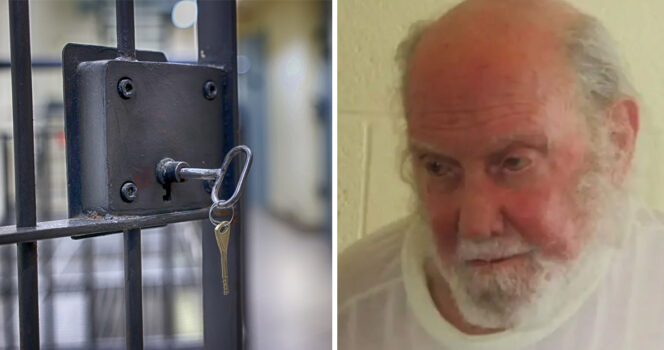
Francis Clifford Smith, who spent more than seven decades in prison and became known as America’s longest-serving prisoner, has died at the age of 101.
Smith was just 25 when he was convicted of first-degree murder in the killing of Grover Hart, a night watchman at a Connecticut yacht club. His conviction ultimately led to one of the longest periods of incarceration in U.S. history.
Smith was scheduled to be executed eight times. On each occasion, he was served a final meal before the execution was stopped. In 1954, after his eighth scheduled execution, his death sentence was commuted to life in prison.
Over the years, Smith became a familiar figure inside Connecticut’s prison system. He even earned the nickname “The Birdman of Osborn” because of his unusual habit of feeding birds.
According to Connecticut Department of Correction public information officer Andrius Banevicius, Smith would hide pieces of bread inside his clothing so he could feed birds. Prison staff reportedly knew about the habit but largely ignored it because they understood that Smith simply wanted to care for the birds.
Smith did make an escape attempt in 1967, but he was eventually captured. He also spent short periods outside prison after being released, only to return to custody after violating the conditions of his release.
In a 2023 interview with the Boston Globe, Smith reflected on his extraordinary life behind bars.
“I’ve been locked up all my life,” he said. “I just go from day to day as the circumstances present themselves.”
Smith was eventually paroled in 2020 and transferred to a secure nursing home, where he spent the final years of his life.
David Skoczulek, a spokesman for 60 West, the facility where Smith lived, said Smith essentially died of old age.
“He had very limited family involvement around his passing,” Skoczulek explained, adding that staff made sure his final wishes were respected and that his death was handled with dignity.
“He did pretty well as far as longevity is concerned,” Skoczulek said.
Smith died in June 2026. No funeral was held, according to reports, and his body was cremated.
His life remains an extraordinary chapter in American criminal justice history — marked by decades of imprisonment, repeated brushes with execution, failed attempts at freedom, and an unexpected reputation as the prisoner who quietly fed birds from the clothes he wore.