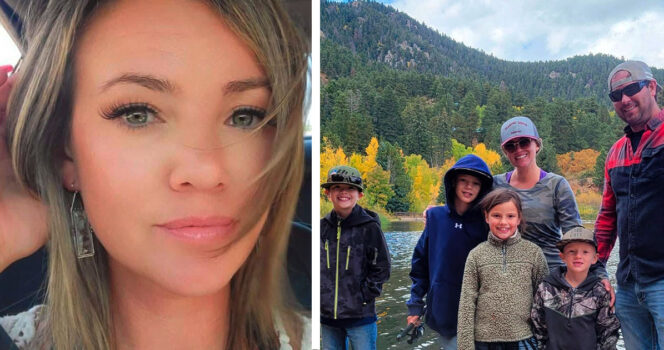
A Kansas mother of four is facing a long and difficult road to recovery after a family camping trip turned into a life-threatening medical emergency.
Britagne Miller, from Goddard, Kansas, was spending time with her husband Jake and their four children at Cheney State Park on May 28 when several spiders crawled onto her leg and body, leaving behind multiple bites. At the time, she didn’t think the injuries were serious.
But just four days later, one of the bites on her calf began swelling rapidly. She developed intense burning and stabbing pain that traveled down her leg and into her foot, forcing her to seek emergency medical care. She was admitted to Wesley Hospital in Wichita on June 4.
A sudden medical crisis
Doctors discovered that Miller had developed a large hematoma and needed immediate surgery. Nearly 300 milliliters of blood clots were removed from her calf, and a drain was placed to help the wound heal.
What initially seemed like a treatable injury quickly became a fight for survival.
Miller already had two blood-clotting disorders that were discovered during a previous pregnancy, along with liver damage and several severe food and medication allergies. Her condition worsened, and doctors noticed she became confused and unable to communicate clearly at times.
Medical staff later feared she was suffering from end-stage liver failure. After two weeks in the hospital, doctors recommended hospice care.
“They gave me three days up to a month to live, so that was scary,” Miller told local news outlet KAKE.
She spent 10 days in the medical intensive care unit, followed by additional time in the cardiac ICU. During her treatment, she received blood transfusions, plasma, platelets, antibiotics, and other therapies to stabilize her condition.
Another dangerous setback
Five days into her recovery, Miller’s surgical wound became infected with staph and a gram-negative bacteria, leading to tissue death around the injury. Doctors performed emergency procedures at her bedside and started additional rounds of antibiotics.
Miller admitted there were moments when she wanted to stop fighting, but thinking about her children gave her the strength to continue.
Throughout her hospitalization, her husband remained by her side while caring for their children. His employer eventually terminated him after he was unable to meet work schedule requirements.
“There was never a question about where I needed to be, but losing my income and insurance has put us in a tough spot financially,” Jake said.
Miller’s mother traveled from Utah to help care for the children, and the family has started a fundraising campaign to help cover medical expenses, transportation, household bills, specialist appointments, and ongoing care.
Doctors expect Miller will eventually return home, but she will need continued home health support and physical therapy. She is not currently eligible for a liver transplant because her blood-clotting issues must first become stable enough for surgery, a process that could take months.
What type of spider may have caused the bites?
Doctors have not been able to confirm the exact spider species responsible, but experts believe a brown recluse may have been involved. In Kansas, the brown recluse and black widow are considered the state’s two medically significant venomous spiders.
Brown recluse spiders often hide in dark, undisturbed areas such as under logs, in rock piles, and inside old shoes or storage boxes. They usually bite when they become trapped against a person’s skin or clothing.
Dr. Raymold Cloyd, a horticultural entomologist at Kansas State University, advised campers and anyone handling stored items to wear gloves and shake out shoes before putting them on.
While brown recluse bites are often treatable for healthy adults, they can become much more dangerous for people with underlying health conditions — as Miller’s case has shown.