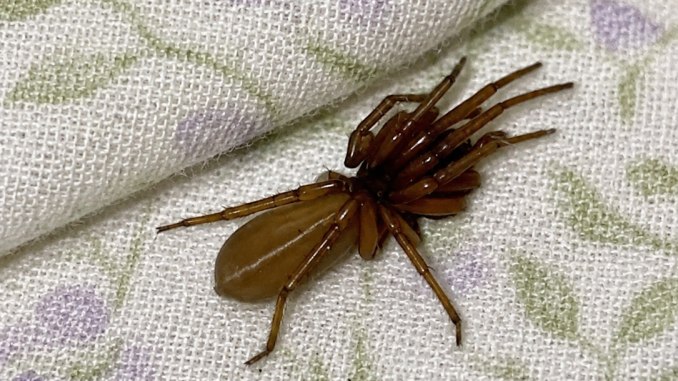
Most people imagine spiders as patient web-builders, crafting intricate traps and waiting for prey to become ensnared. However, the red-fanged wandering spider follows a completely different strategy. Rather than relying on webs, this remarkable nocturnal hunter depends on stealth, speed, and precision. Its vivid crimson fangs and agile movements make it one of the most intriguing predators in the arachnid world.
Unlike web-spinning species, the red-fanged wandering spider actively searches for prey after dark. As night falls, it emerges from hiding places beneath rocks, fallen logs, and leaf litter, setting out on a careful hunt. Its diet includes insects, small arthropods, and even other spiders. Instead of rushing toward its target, it moves with patience and purpose, guided by highly sensitive sensory hairs on its legs that detect even the slightest vibrations.
When prey is located, the spider launches a swift and highly accurate attack. Its distinctive red fangs deliver venom that rapidly immobilizes the victim, leaving little opportunity for escape. The speed and efficiency of the strike demonstrate a hunting technique refined through millions of years of evolution.
Despite its intimidating appearance, the red-fanged wandering spider poses little threat to humans. It is generally shy and prefers to avoid confrontation whenever possible. Encounters usually happen only when the spider is accidentally disturbed. While its venom is highly effective against prey, it is not considered dangerous to people.
This hunting lifestyle offers several advantages. By abandoning the need to build and maintain webs, the spider conserves energy and can explore a wider range of habitats in search of food. Unlike web-dependent species that must wait for prey to come to them, wandering hunters actively pursue opportunities, allowing them to thrive in diverse environments.
Researchers continue to study these fascinating spiders to better understand their behavior, sensory abilities, and evolutionary adaptations. Their combination of keen senses, specialized venom, and rapid reflexes has made them highly successful predators within their ecosystems.
Beyond their hunting skills, red-fanged wandering spiders play an important ecological role. By controlling populations of insects and other small creatures, they help maintain balance in their habitats and indirectly support plant health by reducing the numbers of herbivorous pests.
As darkness settles across the forest floor, the red-fanged wandering spider begins its silent patrol. It serves as a reminder that not all successful predators rely on traps. Some have mastered a different approach—one built on stealth, adaptability, and perfectly timed action. More than just a spider, this remarkable hunter represents the incredible diversity and ingenuity found throughout the natural world.