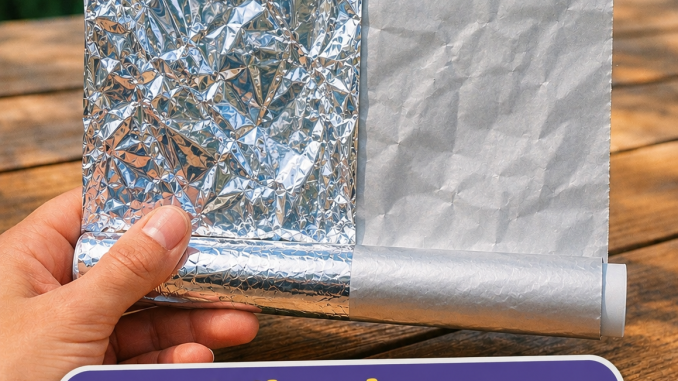
Aluminum foil is one of those everyday kitchen items most people use without thinking twice about it. Whether you’re wrapping leftovers, lining a baking tray, or covering food while cooking, foil is a simple but incredibly useful household tool. Still, many people have wondered about one small detail: why does aluminum foil have one shiny side and one dull side?
If you’ve ever looked closely at a sheet of foil and questioned which side should face outward, you’re definitely not alone. The answer is actually quite simple and comes down to the way aluminum foil is manufactured. Once you understand the process behind it, the mystery becomes much easier to explain.
How Aluminum Foil Is Made
To understand the difference between the shiny and matte sides, it helps to know how aluminum foil is produced. Aluminum starts as a thick sheet of metal that is gradually rolled thinner and thinner through heavy industrial rollers until it becomes the lightweight foil we use in our kitchens.
During the final stage of production, the foil becomes so thin that two layers are rolled together at the same time to prevent tearing. The sides of the foil touching the rollers become smooth and reflective, while the sides pressed against each other develop a duller appearance. That’s the reason aluminum foil ends up with two different finishes.
The Science Behind the Two Sides
The shiny side forms because it comes directly into contact with the polished steel rollers during manufacturing. This creates a smoother surface that reflects more light, giving it the glossy appearance we recognize.
The dull side develops where the two sheets of foil press against one another during rolling. Since those surfaces don’t receive the same polishing effect from the rollers, they appear slightly rougher and less reflective.
Even though the two sides look different, they are essentially identical in terms of performance and material quality. The difference is purely cosmetic and caused by the manufacturing process.
Does It Matter Which Side You Use?
The simple answer is no. For most cooking, baking, and food storage tasks, it makes virtually no difference whether you use the shiny side or the dull side.
While the shiny side reflects slightly more heat and light, the difference is so minor that it doesn’t noticeably affect cooking results. Whether you’re wrapping food, covering dishes, or lining baking pans, both sides perform equally well.
In food storage, aluminum foil works by sealing out air and moisture, and both sides do this effectively. So there’s no need to stress about which side should face in or out.
Common Uses for Aluminum Foil
Aluminum foil remains one of the most versatile tools in the kitchen. Some of its most popular uses include:
• Wrapping meat or vegetables for roasting
• Covering dishes while baking
• Grilling delicate foods like fish or vegetables
• Storing leftovers in the refrigerator
• Preventing freezer burn when freezing food
Beyond cooking, foil can also be useful around the house. Many people use it for cleaning pans, sharpening scissors, or even arts and crafts projects.
Why People Still Have Preferences
Even though there’s no major functional difference between the two sides, some people still prefer using one side over the other. Some cooks like placing the shiny side outward when roasting because they believe it reflects heat better, while others prefer the dull side for wrapping food because of its softer appearance.
In reality, both sides work the same way, so the choice mostly comes down to habit or personal preference.
Conclusion
The difference between the shiny and dull sides of aluminum foil may seem mysterious at first, but it’s simply the result of the manufacturing process. One side becomes smooth and reflective from contact with industrial rollers, while the other develops a matte finish from touching another sheet of foil during rolling.
At the end of the day, both sides perform equally well for cooking, baking, and food storage. It’s a small detail most people overlook, but once you know the reason behind it, it becomes an interesting example of the hidden engineering behind everyday household items.