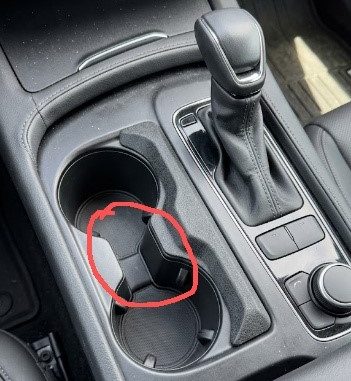
I always thought the small gap in my car’s cup holder was just part of the plastic molding—until I saw people discussing it online. After that, I started noticing it in almost every vehicle, and it became obvious that it was designed intentionally, not added by accident. That tiny space between the cup holders actually serves a surprisingly practical purpose.
Most drivers use cup holders every day without ever questioning why they’re shaped the way they are. But automotive designers carefully build subtle functional details into car interiors, and this gap is one of those smart little features many people overlook.
So what is it actually for?
In many vehicles, the space between cup holders helps make grabbing drinks easier, stabilizes cups of different sizes, and prevents beverages from pressing awkwardly against each other. Instead of being wasted space, it acts as a flexible area that improves usability.
For instance, when two large drinks are placed side by side, the gap gives enough room for your fingers to lift one cup without hitting the other. It sounds minor, but once you notice it, the convenience becomes obvious.
In some cars, the opening also accommodates mugs with handles. If you’ve ever placed a travel mug in your cup holder, there’s a good chance the handle rested naturally in that middle space. However, not every manufacturer designs it for the exact same reason. Some use it mainly for easier grip access, while others shape it specifically to support larger bottles or handled mugs.
One thing I learned is that car interiors are rarely designed around a single purpose. Even the smallest details usually serve multiple functions.
Years ago, cup holders were much simpler because drinks themselves were smaller. Today’s oversized tumblers, reusable bottles, iced coffee cups, and handled mugs have forced designers to rethink the shape entirely. That’s why modern cup holders often look asymmetrical or include unusual gaps and side cutouts.
The main purpose of these openings is flexibility. They allow different drink sizes to fit in a compact area while staying secure during turns or sudden braking. A well-designed holder also lets drivers grab drinks quickly and comfortably, which improves convenience and even safety.
Many newer vehicles include extra features like rubber inserts, spring-loaded grips, textured surfaces, and narrow channels to reduce wobbling and hold various cup sizes more securely. Oversized water bottles, apparently, are one of the biggest challenges for interior designers.
Interestingly, car owners have also found creative alternative uses for the gap. Online, people mention using it for charging cables, parking tickets, receipts, coins, straw wrappers, or temporary key storage. Some even use the opening to steady cups while opening lids or inserting straws when the car is moving.
The cup holder gap is just one example of the hidden practicality built into modern vehicles. Other subtle details include the arrow next to the fuel icon showing which side the gas cap is on, hidden trunk hooks for grocery bags, small storage spaces beneath seats, and windshield vents designed to reduce fogging. These features quietly improve daily driving without drawing attention to themselves.
In the end, the gap between car cup holders exists mainly for convenience and flexibility. It helps stabilize drinks, makes them easier to grab, and in some vehicles accommodates mug handles or larger containers.
Because every manufacturer designs interiors differently, there isn’t one universal explanation for the feature. Some gaps are wider, narrower, or positioned differently depending on the vehicle’s layout and target audience. But the overall idea remains the same: small design choices can make everyday tasks noticeably easier.
So the next time you notice that little space between your car’s cup holders, remember—it’s not just random plastic. It’s one of those clever details you rarely think about until you finally realize why it’s there.