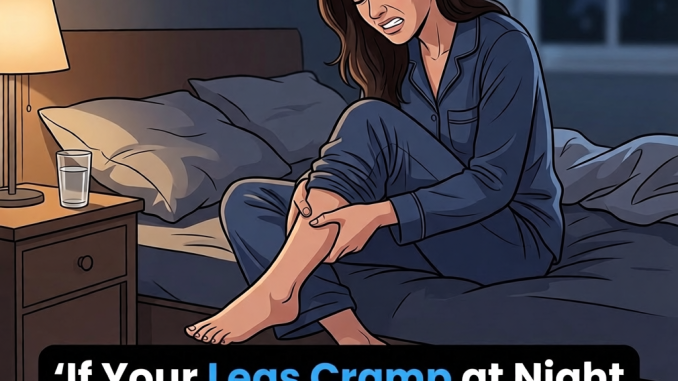
There’s nothing quite like the sharp pain that suddenly wakes you in the middle of the night. One moment you’re sleeping peacefully, and the next, your calf tightens so intensely it feels impossible to move. Your toes curl, the muscle hardens instantly, and all you can think about is making the pain stop. For many people, nighttime leg cramps are an all-too-familiar experience—but fortunately, they’re usually more annoying than dangerous.
Often called “charley horses,” night leg cramps are extremely common. Studies suggest that a large percentage of adults experience them at some point in their lives, especially as they get older. Although they can appear unexpectedly, they are most often connected to everyday habits and lifestyle factors rather than serious medical conditions.
One of the biggest causes is dehydration. When the body lacks enough fluids, muscles can become more likely to spasm involuntarily. Low levels of important minerals such as magnesium, potassium, and calcium may also contribute, since these nutrients play a major role in healthy muscle function. Spending long hours standing, overexerting muscles during exercise, or even taking certain medications like diuretics and statins can also increase the chances of nighttime cramping.
What makes these cramps so alarming is how suddenly they strike. A muscle can contract with such force that the leg temporarily locks in place. The pain usually reaches its peak within seconds and can linger for minutes afterward. Even though the sensation feels severe, most cramps are harmless and don’t point to a major illness. Still, repeated cramps may be your body’s way of signaling that it needs better care and attention.
Simple daily habits can often reduce the problem significantly. Staying hydrated throughout the day helps muscles function properly and supports healthy electrolyte balance. Eating nutrient-rich foods like bananas, leafy greens, nuts, and dairy products can provide minerals that help prevent cramping. Gentle stretching before bed—especially calf stretches—may also relax the muscles and lower the risk of sudden spasms during sleep.
Sleep position can matter more than many people realize. Sleeping with feet pointed downward can shorten the calf muscles and make cramps more likely to happen. Keeping the feet in a more neutral position with a pillow or avoiding overly tight bedding may help prevent nighttime tightening.
Although most night cramps are harmless, there are situations where medical advice is important. If cramps become frequent, extremely painful, or are accompanied by swelling, redness, numbness, or muscle weakness, it’s best to consult a healthcare professional. These symptoms could point to circulation problems, nerve conditions, or other underlying health concerns.
Additional lifestyle changes may also help. Regular physical activity such as walking or swimming can improve muscle flexibility and circulation. Reducing alcohol intake and limiting caffeine late in the day may lower the risk of nighttime spasms as well. In some cases, supplements like magnesium or certain muscle-relief remedies may provide extra support when recommended by a doctor.
At the end of the day, nighttime leg cramps are often your body’s way of asking for better balance—more hydration, improved nutrition, regular stretching, or healthier muscle care. They may not usually signal an emergency, but they are still worth paying attention to. The next time a cramp wakes you from sleep, try gently massaging the muscle and flexing your foot upward to ease the tension. Then consider the small changes you can make during the day to help prevent it from happening again. With consistent habits and proper care, those painful nighttime interruptions can become far less frequent—and restful sleep can return once more.