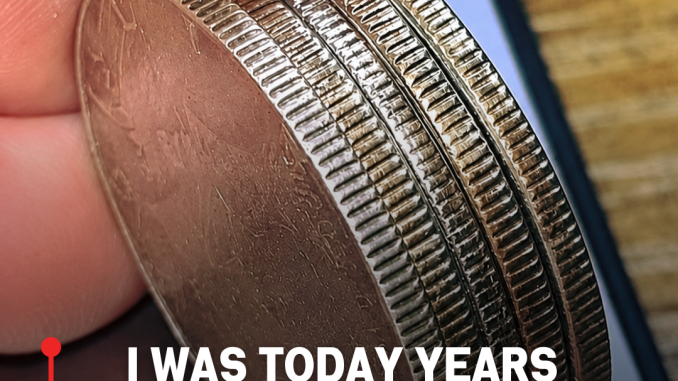
Coins are such a normal part of everyday life that most people rarely stop to look closely at them. We use them at stores, vending machines, parking meters, and coffee shops without giving much thought to the tiny details built into their design. One of the most overlooked features is the ridged edge found on many coins — a detail that actually has a fascinating history tied to fraud prevention and economic security dating back centuries.
Long before modern banking existed, coins were made from precious metals like silver and gold. Their value came directly from the amount of metal they contained, not just the number stamped on them. Because of this, even the smallest alteration to a coin could create an opportunity for dishonest profit.
One of the most common scams in early economies was called coin clipping. People would shave tiny amounts of metal from the edges of coins and collect the shavings over time. The coins still looked normal enough to stay in circulation, while the stolen silver or gold could eventually be melted down and sold. Although each coin lost only a small amount, the practice became a serious threat to the economy.
As clipped coins spread through circulation, trust in currency started to decline. Merchants became cautious about accepting coins, governments lost valuable metal reserves, and entire financial systems faced instability. In some places, the problem grew so severe that it forced major currency reforms.
A major breakthrough came in the late 1600s when Isaac Newton — famous for his work in physics and mathematics — became Warden of the Royal Mint in England. Newton took the role seriously and worked aggressively to fight counterfeiting and coin fraud.
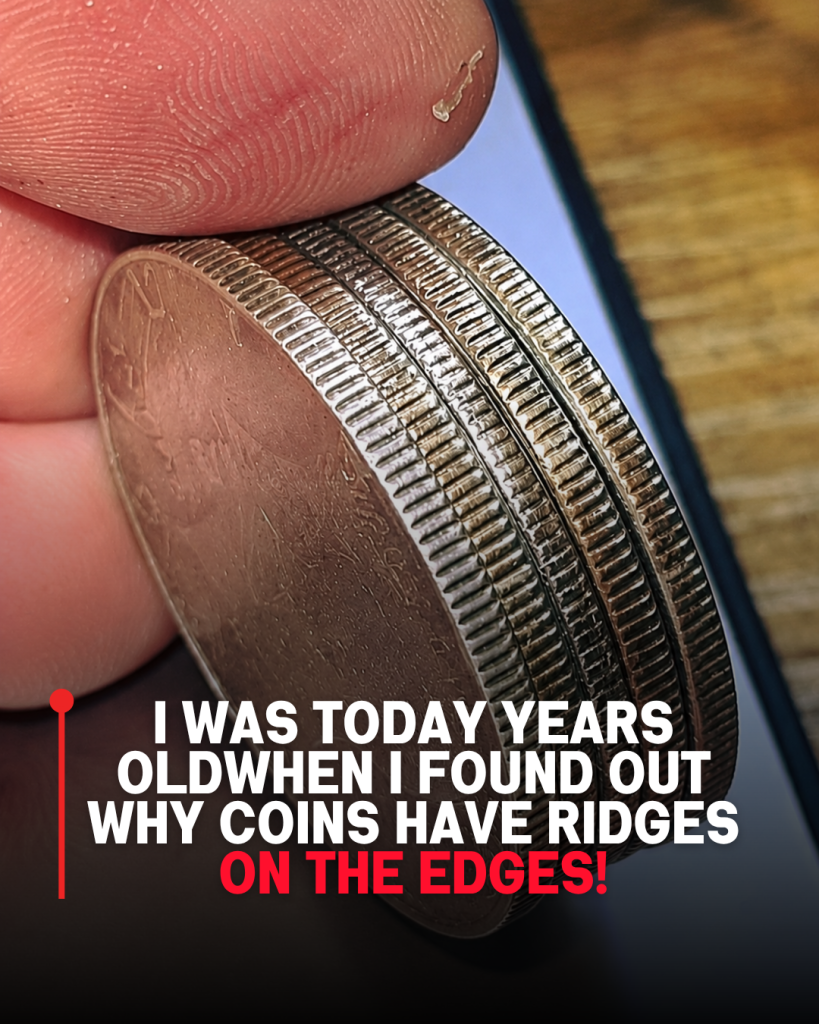
One of the most effective solutions introduced during that era was the addition of ridged, or reeded, edges on coins. These grooves were not added for decoration. They served as a security feature designed to make tampering obvious. If someone shaved metal from the edge of a coin, the ridges would become uneven or disappear, immediately revealing that the coin had been altered.
The idea worked extremely well. Reeded edges made clipping far more difficult and also complicated counterfeiting, since reproducing perfectly spaced grooves was challenging with the technology available at the time. The design helped restore confidence in currency and became a lasting standard in coin production.
Even though modern coins are no longer made from large amounts of silver or gold, many still keep their ridged edges. Today, those grooves continue to serve practical purposes. Coin-operated machines and vending systems often use edge patterns to help identify authentic coins and detect counterfeits or damaged currency.
The ridges also help visually impaired individuals distinguish between coins by touch. Different textures and edge patterns make it easier to identify denominations without needing to rely on sight, making currency more accessible and user-friendly.
Tradition is another reason these edges remain. Over generations, people have come to associate certain textures and appearances with specific coins. Changing those familiar designs too drastically could create confusion, so many countries continue using ridged edges as part of their standard coin design.
Interestingly, not every coin has ridges. Lower-value coins such as pennies or nickels are often smooth because historically they were not worth enough to justify clipping. Higher-value coins, however, were more likely to be targeted, which is why they kept the protective grooved edges.
Today, those tiny ridges may seem insignificant, but they represent centuries of innovation in financial security. What looks like a simple design choice is actually a surviving solution to an old problem involving trust, fraud, and the protection of economic systems.
In a way, every coin carries a small piece of history — a reminder of how societies adapted over time to protect something as essential as money.