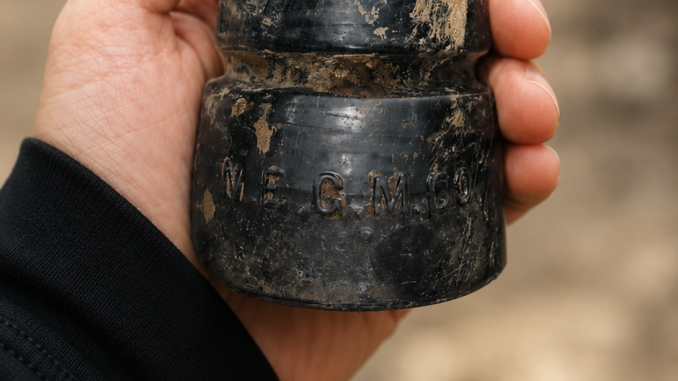
From time to time, the internet rediscovers everyday objects that most people have ignored for years. A single photo gets shared online, curiosity spreads quickly, and suddenly thousands of people begin asking the same question:
“What is that strange glass object sitting on old telephone poles?”
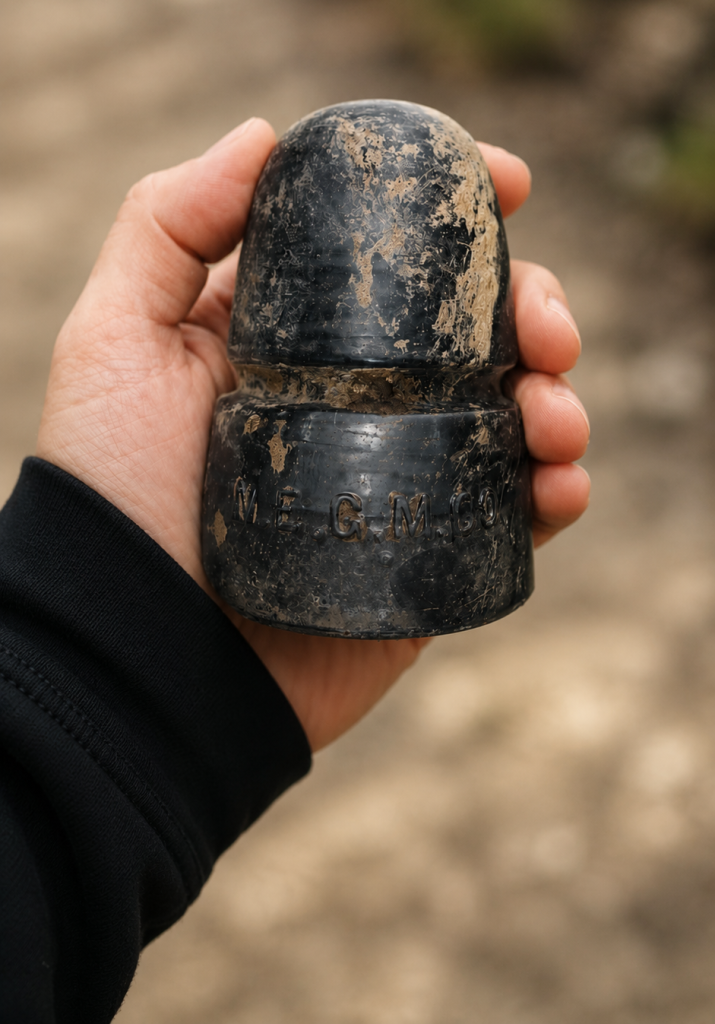
Some describe them as glass mushrooms. Others compare them to bells, domes, or stacked discs. Weathered by decades of sun, rain, and wind, these objects still appear along rural roads, abandoned railways, and aging utility lines across many parts of the world.
Online theories are often creative.
Some believe they were decorative pieces added to utility poles. Others assume they were part of early lighting systems, railroad technology, or forgotten communication devices. A few people even mistake them for antique warning systems or weather instruments.
But the real answer is far more interesting — and far more important.
These objects are electrical insulators, and they played a critical role in building the modern world.
Without them, large-scale electrical systems, telegraph networks, telephone lines, and early power grids would have struggled with dangerous electrical leaks, equipment failures, and constant safety risks. Though small and easy to overlook, insulators became one of the most important inventions in the history of electrical engineering.
Today, they remain a quiet reminder of how infrastructure shaped modern life.
What Are Electrical Insulators?
Electrical insulators are devices designed to stop electricity from escaping from the wires carrying it.
That may sound simple, but it solved one of the biggest challenges engineers faced during the expansion of electrical systems.
Electricity naturally seeks the easiest path to the ground. If energized wires touched wooden poles, metal supports, or nearby surfaces directly, electrical current could escape. This could lead to power loss, electrical arcing, fires, damaged equipment, and serious safety hazards.
Insulators create a protective barrier between live wires and the structures supporting them.
They allow electricity to continue flowing through the wire while preventing it from transferring into poles or surrounding materials.
In short, insulators help keep electrical systems stable, safe, and reliable.
Why Glass and Porcelain Were Used
To many people today, glass may seem like a strange choice for electrical equipment. Most people associate glass with windows, bottles, or decorative objects — not power lines.
But glass has one very useful property:
It does not allow electricity to pass through easily.
That makes it an excellent insulating material.
During the late 1800s and early 1900s, glass became one of the most common materials used for insulators because it offered several major advantages:
Strong electrical resistance
Good durability outdoors
Resistance to corrosion
Long service life
Affordable manufacturing
Porcelain also became widely used for similar reasons. It handled harsh weather conditions well and could withstand heat, moisture, and environmental stress over long periods of time.
Depending on voltage levels and environmental conditions, engineers would choose either glass or porcelain for different systems.
Many insulators installed more than a century ago can still be found today.
The Expansion of Electricity and Communication
The late 19th century and early 20th century marked a period of enormous technological growth.
Telegraph systems allowed messages to travel across countries in minutes instead of days. Telephone networks soon followed, connecting homes, businesses, and cities over long distances.
At the same time, electrical power systems began spreading rapidly through urban and rural communities.
This created a major engineering challenge.
Wires carrying electrical signals or power had to stretch over long distances while remaining isolated from the poles supporting them.
Engineers needed a safe and reliable solution.
Insulators became the answer.
Thousands upon thousands of glass and porcelain insulators were installed across growing networks of poles and wires.
They supported:
Telegraph systems
Telephone networks
Electrical distribution systems
Railroad signaling systems
Industrial electrical infrastructure
Without insulators, these systems would have faced constant interruptions and dangerous failures.
How Insulators Actually Work
Electricity travels through conductive materials like copper or aluminum wires. If it finds an easier route to the ground, it may leave the wire.
Insulators block that escape route.
They physically separate energized wires from the structures holding them in place.
Because glass and porcelain resist electrical flow, current cannot easily pass through the insulator itself. This forces the electricity to remain inside the wire where it belongs.
However, moisture, dirt, pollution, and weather conditions can sometimes allow electricity to travel along surfaces. Engineers had to account for this when designing insulators.
That is why many old insulators have unusual shapes.
Why Insulators Have Ridges and Curves
One of the most recognizable features of vintage insulators is their layered appearance.
Many include:
Thick ridges
Curved skirts
Stacked sections
Fluted edges
These shapes were not decorative.
Every curve served a purpose.
The ridges increased what engineers call “creep distance,” which refers to the path electricity would need to travel along the surface of the insulator to escape.
The longer and more complicated that path becomes, the harder it is for electrical current to jump across it.
This becomes especially important during rain, fog, or humid conditions.
The design also helps water drip away instead of forming conductive pathways across the surface.
In simple terms, the unusual shape helped keep electricity under control — even during bad weather.
The Role of Insulators in Telegraph Systems
Long before smartphones or internet connections existed, telegraph systems transformed communication.
Messages that once required days or weeks to deliver could suddenly travel almost instantly using electrical signals sent through wires.
This revolutionized:
Business operations
News reporting
Railroad coordination
Government communication
Military strategy
Telegraph lines crossed mountains, forests, deserts, and rural farmland. Insulators were essential for keeping those signals stable and reliable over long distances.
Without proper insulation, signals would weaken, leak, or become distorted.
Glass insulators quietly helped make long-distance communication possible.
How Telephone Networks Relied on Them
As telephone technology expanded, reliable wiring systems became even more important.
Unlike telegraphs, telephones transmitted voice signals that required cleaner and more consistent electrical transmission.
Insulators once again became essential.
They helped telephone companies stretch lines across cities and rural communities while reducing interference and signal loss.
For many communities, telephone lines represented their first real connection to the outside world.
And every one of those lines depended on insulators functioning correctly.
What Happens When an Insulator Fails?
Although insulators are durable, they can still become damaged over time.
Common issues include:
Cracks
Chips
Moisture buildup
Surface contamination
Structural wear
When insulators fail, electricity may begin leaking or arcing across surfaces.
This can cause:
Power outages
Equipment damage
Fire hazards
Dangerous electrical arcs
Safety risks for workers
Utility companies regularly inspect and replace damaged insulators to keep systems operating safely.
Why Vintage Insulators Became Collectibles
Over time, old glass insulators gained popularity among collectors and antique enthusiasts.
People became fascinated by their colors, shapes, and historical significance.
Vintage insulators can appear in shades such as:
Aqua blue
Green
Amber
Purple
Teal
Clear glass
Some rare colors and manufacturer markings have become highly valuable among collectors.
Today, old insulators are often displayed as:
Decorative antiques
Garden pieces
Historical artifacts
Lamps and crafts
Museum exhibits
What was once a simple utility component eventually became part of industrial history and collector culture.
Modern Insulators Have Changed
Although many vintage glass insulators remain visible today, modern electrical systems now use newer materials.
Modern insulators are often made from:
Composite polymers
Engineered ceramics
Fiberglass-reinforced materials
Silicone-based compounds
These newer designs are lighter and better suited for modern high-voltage transmission systems.
They are built to handle:
Extreme temperatures
Heavy electrical loads
Pollution-heavy environments
Severe weather conditions
Despite these changes, the basic purpose remains exactly the same:
Keep electricity safely flowing along its intended path.
Why People Keep Rediscovering Them Online
One reason these objects continue going viral online is because they blend into the background of everyday life.
Most people pass them constantly without noticing them.
Then one day, someone looks up and becomes curious.
The objects appear unusual, old-fashioned, and oddly decorative. They clearly served a purpose, but many younger generations no longer recognize them.
That mystery naturally sparks attention.
Online discussions quickly fill with guesses, explanations, memories, and historical photos.
In many ways, insulators remind us how much hidden infrastructure quietly supports modern life.
The Engineering We Rarely Notice
Modern society depends on systems most people rarely think about.
Electricity arrives instantly when we flip a switch. Communication travels across continents in seconds. Power grids, internet systems, and communication networks operate so smoothly that their infrastructure often becomes invisible.
But every major system depends on countless smaller inventions working together behind the scenes.
Insulators are one of those inventions.
They do not move.
They do not flash.
They do not make noise.
Most people barely notice them at all.
Yet they helped make modern communication and electrical systems possible.
Without them, the growth of cities, industries, and long-distance communication would have been far more difficult and dangerous.
Final Thoughts
The next time you notice one of those strange glass objects sitting on an old utility pole, you will know it is far more than an old decoration.
It is an electrical insulator — a small but essential invention that helped power the modern world.
Through clever engineering, durable materials, and carefully designed shapes, these devices allowed electricity and communication systems to expand safely across enormous distances.
They supported telegraph lines, telephone networks, and electrical grids that transformed everyday life.
Even today, they remain quiet symbols of an era when engineering changed the world one utility pole at a time.
Sometimes the most important inventions are not the loudest or most glamorous.
Sometimes they are the ones quietly doing their job for decades high above our heads.